

Introduction
As food processing companies expand their product portfolios, purchasing a separate industrial freezer for every food product is not always an economically reasonable option.
A food processing plant may produce chicken products, seafood, pasta, bakery products, and prepared foods within the same facility. If one freezing system can accommodate multiple product types, the company may be able to reduce equipment investment, floor space requirements, and the cost of supporting refrigeration infrastructure.
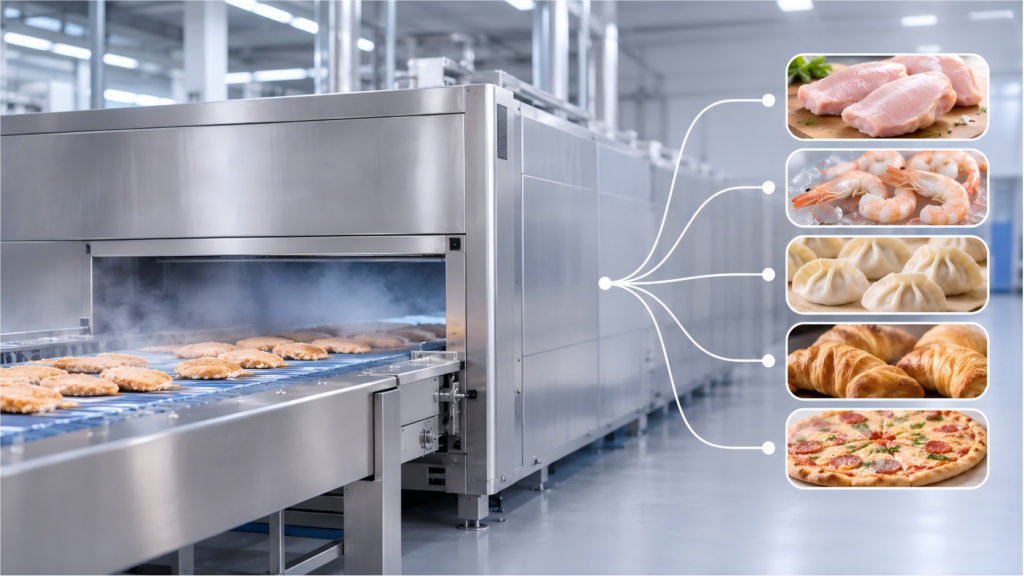
But is a single industrial freezer really suitable for freezing different types of food?
The answer depends on much more than whether the equipment can physically accommodate different products. Key considerations include freezing temperature, residence time, product dimensions, loading density, conveyor configuration, hygiene requirements, and production scheduling.
When different products have compatible processing requirements, sharing one freezer can be a practical investment strategy. However, if their freezing requirements differ significantly, forcing them to use the same equipment may lead to lower production efficiency, inconsistent product quality, and additional operating costs.
This article examines the technical suitability and economic considerations of using one industrial freezer for multiple food products, helping food manufacturers make more informed equipment selection decisions.
1. Why Do Different Food Products Require Different Freezing Conditions?
Although most industrial freezers use circulating cold air or direct heat exchange with refrigerated surfaces, the actual freezing requirements vary considerably between food products.
The main influencing factors include product thickness, initial temperature, moisture content, shape, surface characteristics, and the required final core temperature.
1.1 Chicken and Poultry Products
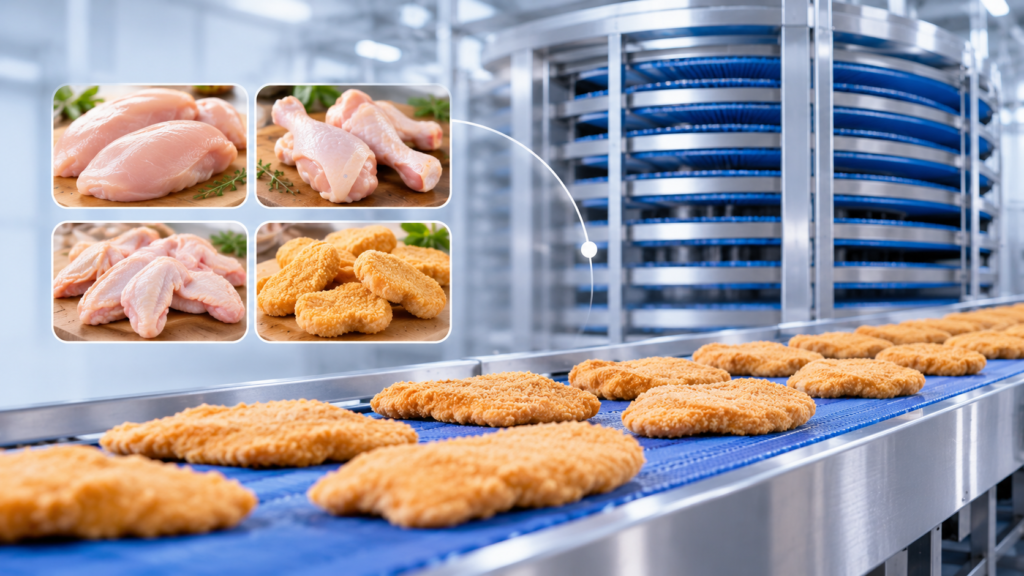
Typical products include:
- Chicken breast, chicken thighs, and other portioned cuts
- Chicken nuggets and chicken patties
- Chicken wings, drumsticks, and other bone-in products
- Breaded and other prepared poultry products
Poultry products often have irregular shapes and varying thicknesses. As a result, freezing time is influenced by product dimensions, geometry, initial temperature, and how products are loaded onto the conveyor belt.
For breaded chicken products, maintaining surface integrity is another important consideration. Excessive mechanical impact or unsuitable airflow conditions may cause coating loss, while uneven product loading can result in inconsistent freezing.
Spiral freezers are commonly used for these applications because they provide extended freezing residence times within a relatively compact footprint and support continuous production.
1.2 Seafood and Aquatic Products
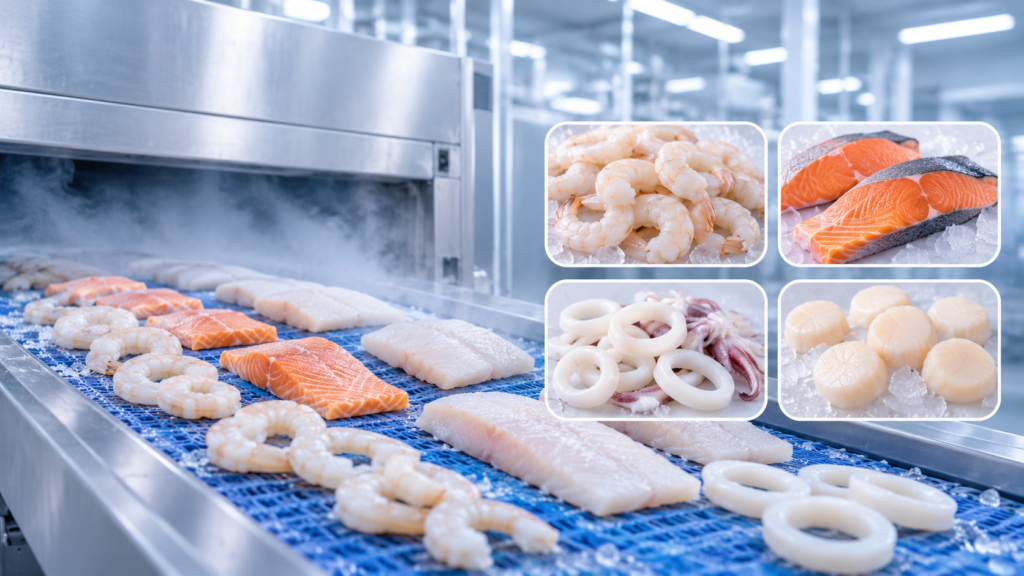
Seafood covers a wide range of products with significantly different physical characteristics. Common examples include:
- Peeled shrimp and prawns
- Fish fillets and fish portions
- Squid rings and diced seafood
- Scallops and other shellfish products
Small individual seafood products often require relatively rapid freezing to maintain product separation and minimize quality deterioration.
Thicker fish fillets and irregularly shaped seafood products may require different residence times and conveyor loading arrangements.
Surface moisture is another important factor. If products enter the freezer with excessive surface water, unsuitable processing conditions may contribute to product adhesion or ice accumulation inside the equipment.
For small individual quick-frozen products that are suitable for suspension in an upward airflow, fluidized bed freezers may be more appropriate. Larger seafood portions are generally better suited to tunnel or spiral freezing systems.
1.3 Pasta and Prepared Foods
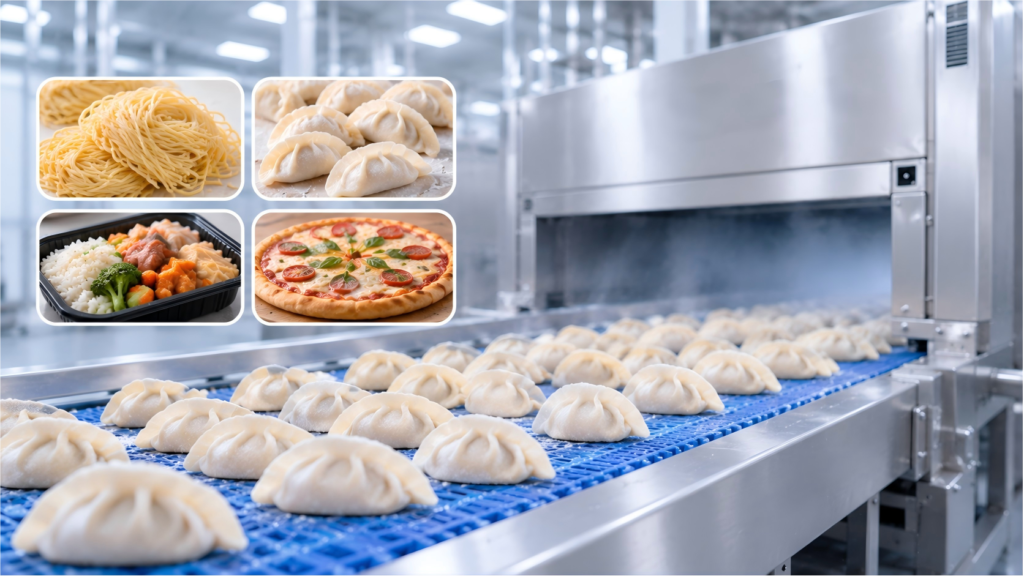
Pasta, dumplings, Italian pasta products, and various prepared foods also have different freezing requirements.
Different formulations may contain meat, vegetables, sauces, or fillings, each with different moisture content and thermal properties.
Product shape and arrangement are equally important. For example, dumplings need to retain their shape during freezing while minimizing the risk of sticking together.
For prepared foods, the freezing system must account not only for the thermal characteristics of the product but also for its physical stability during transportation through the equipment.
A continuous freezing system can process multiple types of prepared foods, but conveyor loading arrangements, airflow distribution, and freezing residence time must be evaluated separately for each product.
1.4 Bakery Products
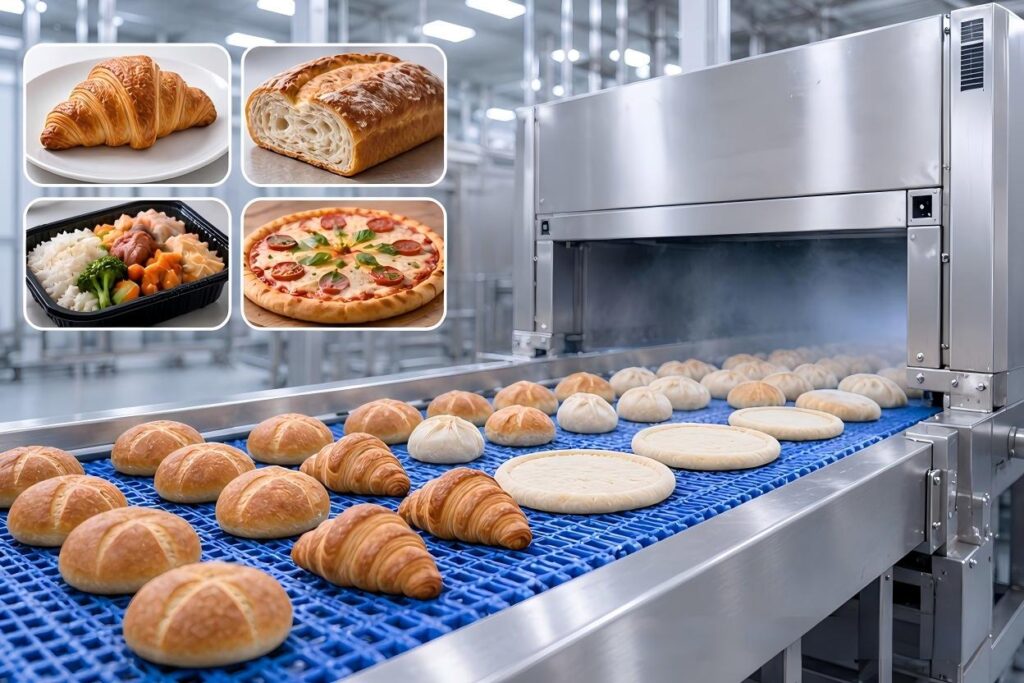
Typical bakery products include:
- Bread and bread rolls
- Puff pastries and croissants
- Pizza bases and finished pizzas
- Dough and par-baked products
Bakery products are often sensitive to mechanical impact and surface moisture loss.
Differences in product shape, density, and moisture distribution can also affect freezing performance.
For example, freezing small pieces of dough and whole pizzas on the same production line may require different conveyor arrangements and freezing residence times.
Key takeaway: A freezer’s ability to handle multiple products does not mean that all products can be processed using exactly the same operating parameters.
2. Which Types of Industrial Freezers Are Suitable for Multi-Product Production?
Equipment selection depends on product characteristics, target capacity, production continuity, and the level of flexibility required by the manufacturer.
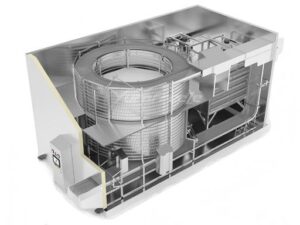
2.1 Spiral Freezers: Suitable for a Wide Range of Continuous Food Production
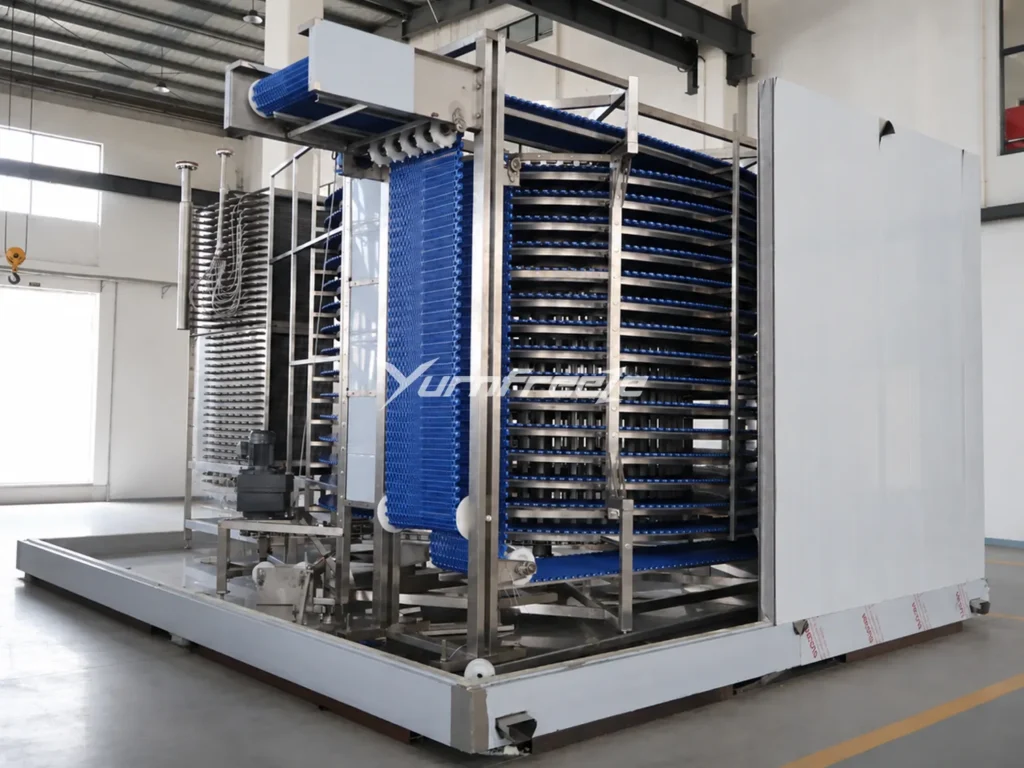
Spiral freezers are widely used for poultry, meat, portioned seafood, bakery products, pizzas, and prepared foods.
Their main advantage is the ability to extend the conveyor path vertically, providing longer freezing residence times while minimizing the required floor space.
The continuous conveyor design also allows products to enter and leave the freezing chamber continuously, reducing interruptions to the production process.
However, when evaluating a spiral freezer for multiple products, several factors require particular attention:
- Conveyor belt width and product loading arrangements
- Available freezing residence time
- Product thickness and dimensions
- Airflow distribution
- Product infeed, transfer, and discharge conditions
As long as the freezing requirements of different products fall within the equipment’s designed operating range, a spiral freezer can support multi-product production.
For factories that switch between different food categories on a weekly basis, a properly designed spiral freezing system can offer a practical balance between production flexibility and equipment utilization.
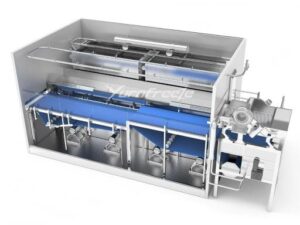
2.2 Multi-Level Tunnel Freezers: Greater Flexibility in Product Conveying
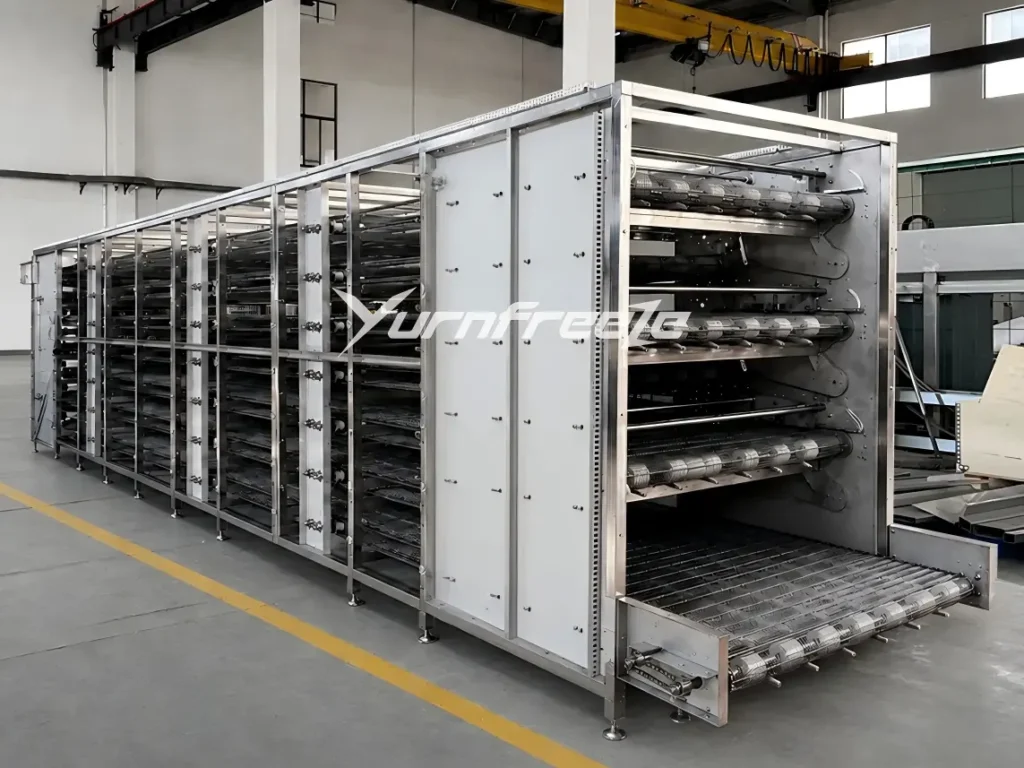
Multi-level tunnel freezers use multiple conveyor levels to extend the effective freezing path while reducing the equipment footprint.
Depending on the design, they can accommodate products with different dimensions and loading arrangements.
Potential advantages include:
- Adjustable conveyor configurations
- Multiple freezing zones
- Flexible product loading arrangements
- Easier integration with upstream and downstream processing equipment
When different products have different dimensions or conveying requirements, a multi-level tunnel freezing system is worth considering.
However, particular attention should be paid to product transfer structures between conveyor levels to prevent product damage, sticking, or accumulation during transfer.
2.3 Fluidized Bed Freezers: Better Suited to Specific Product Categories
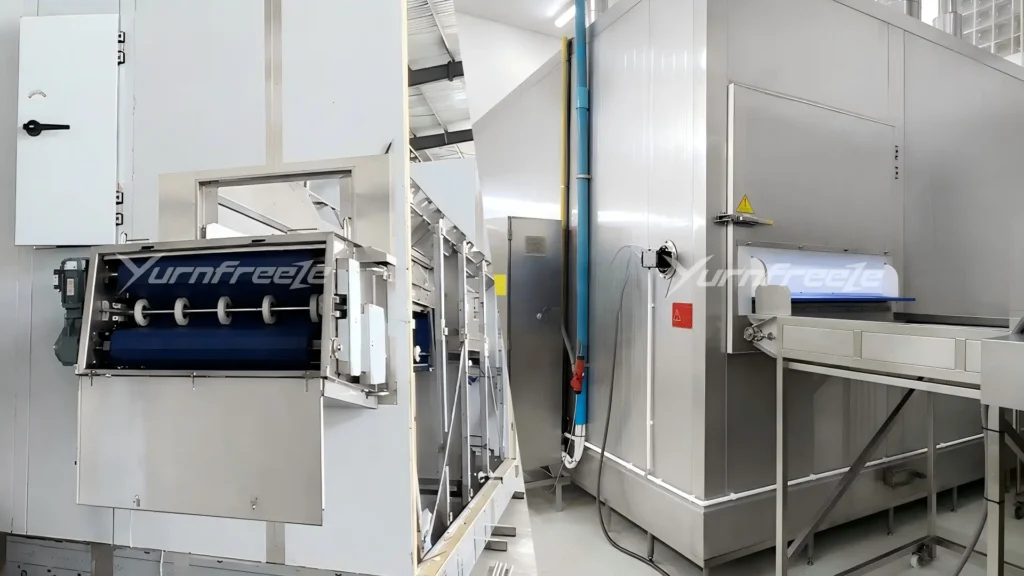
Fluidized bed freezers are particularly suitable for small individual products that can be suspended by upward airflow.
Typical applications include:
- Green peas
- Sweet corn
- Diced vegetables
- Blueberries
- Certain small individual seafood products
However, a fluidized bed freezer is not a universal solution for every type of food.
Larger, irregularly shaped, heavier, or easily damaged products may not achieve stable fluidization. These products are generally better suited to conventional conveyor or spiral freezing systems.
Therefore, if a factory produces both individually quick-frozen vegetables and large chicken portions, it may need different freezing technologies rather than trying to process everything in one fluidized bed freezer.
3. Hidden Costs During Multi-Product Changeovers
The purchase price of equipment represents only part of the total investment.
When multiple products share one freezer, production changeovers can create additional costs that are often underestimated during the equipment selection stage.
3.1 Cleaning and Hygiene Management

Cleaning requirements can vary significantly between different products.
For example, changing from raw seafood to bakery products may require a more extensive cleaning procedure than switching between two similar poultry products.
Important considerations include:
- Protein and fat residues
- Food particles trapped in conveyor structures
- Allergen cross-contact
- Residual moisture inside the equipment after wet cleaning
- Time required for cleaning and inspection
For products with different allergen profiles, clear cleaning procedures and verification protocols are particularly important.
The equipment should be designed with sufficient cleaning accessibility to allow effective inspection and cleaning of all product-contact surfaces.
If internal structures are difficult to access or conveyor components are not easy to clean, changeover times may increase and food safety risks may become more difficult to control.
3.2 Adjustments to Temperature and Freezing Time
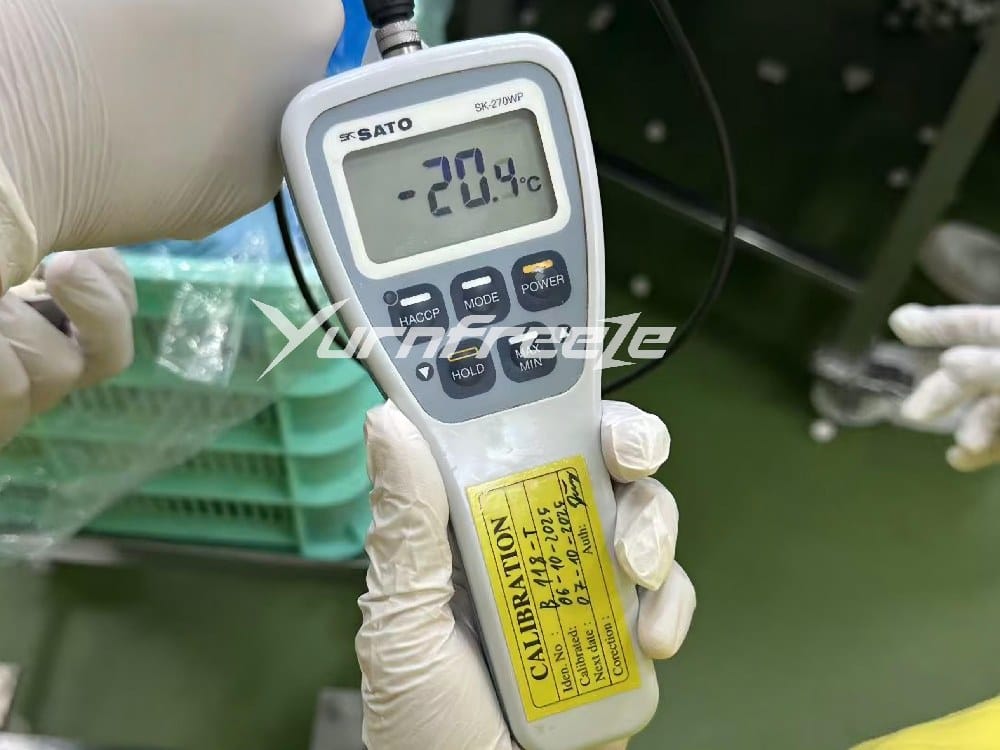
Different food products may require different freezing times.
Thicker poultry portions may require longer residence times than small vegetable products, while delicate bakery products may need different airflow conditions.
When changing products, the following operating parameters may need adjustment:
- Conveyor belt speed
- Fan operating frequency
- Airflow distribution
- Product loading density
- Operating parameters of individual freezing zones
Not every industrial freezer can accommodate these adjustments under actual production conditions.
If every product changeover requires substantial parameter adjustments or repeated product testing, the flexibility gained from sharing one freezer may become an additional production management burden.
3.3 Production Scheduling and Downtime

When multiple product categories share the same freezer, production scheduling becomes more complicated.
Each product changeover may involve the following steps:
- Stop or reduce the production rate of the current product.
- Clear any remaining products from inside the equipment.
- Carry out cleaning and sanitation procedures.
- Inspect the conveyor belt and product-contact areas.
- Adjust the operating parameters for the next product.
- Conduct a trial run and verify product quality before resuming full-scale production.
The time required for these activities directly reduces the equipment’s available production time.
For factories handling frequent small-batch production, changeover losses may even outweigh the savings achieved by purchasing fewer freezing systems.
4. One Shared Freezer or Multiple Dedicated Freezers: Which Is More Economical?
A sound equipment investment decision should be based on Total Cost of Ownership (TCO) over the equipment’s lifecycle, rather than simply comparing initial purchase prices.
| Comparison Factor | One Shared Freezer | Multiple Dedicated Freezers |
|---|---|---|
| Initial investment | Generally lower | Generally higher |
| Floor space | Usually more compact | May require more space |
| Production flexibility | Depends on product compatibility | Optimized for specific products |
| Changeover downtime | May be longer | Usually shorter |
| Cleaning requirements | More complex between different products | Product workflows can be separated more easily |
| Production scheduling | Requires more coordination | Greater production independence |
| Equipment utilization | Can be high with effective scheduling | Depends on demand for each product |
| Expansion flexibility | Limited by shared capacity | Easier to expand specific product lines |
4.1 When Is One Shared Freezer More Economical?
A shared freezing system is generally worth considering under the following conditions:
- Different products have similar freezing requirements.
- Product dimensions and conveyor loading conditions are compatible.
- Production batches are sufficiently large to minimize frequent changeovers.
- Factory production schedules are relatively stable.
- Available floor space or initial capital investment is limited.
For example, a factory primarily producing different poultry cuts and breaded chicken products may be able to use one properly designed spiral freezer if the products have compatible freezing temperatures, residence times, conveying requirements, and hygiene management procedures.
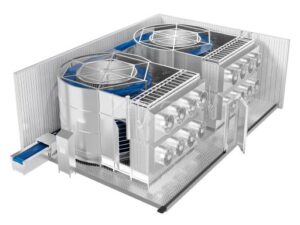
An actual project in Australia provides a relevant example. Yurnfreeze supplied a self-stacking spiral freezer for a local food processing application involving products such as breaded chicken schnitzels and chicken pieces. The project specified a target processing capacity of 1,000–1,500 kg/h, an operating temperature of -35°C, and a target product discharge temperature of -18°C.
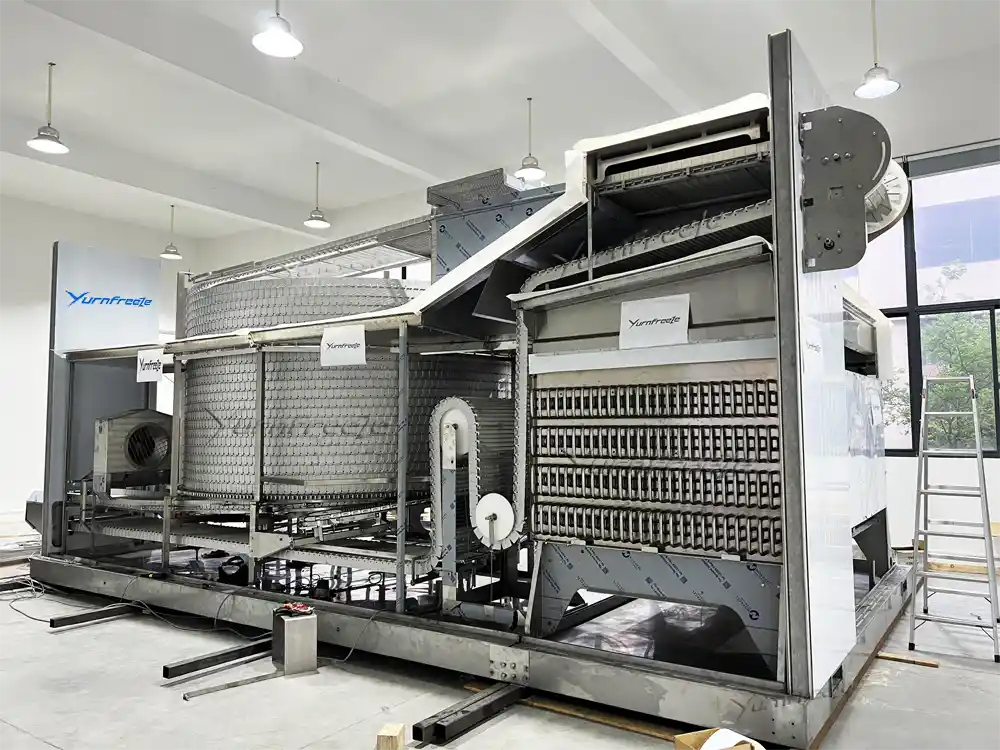
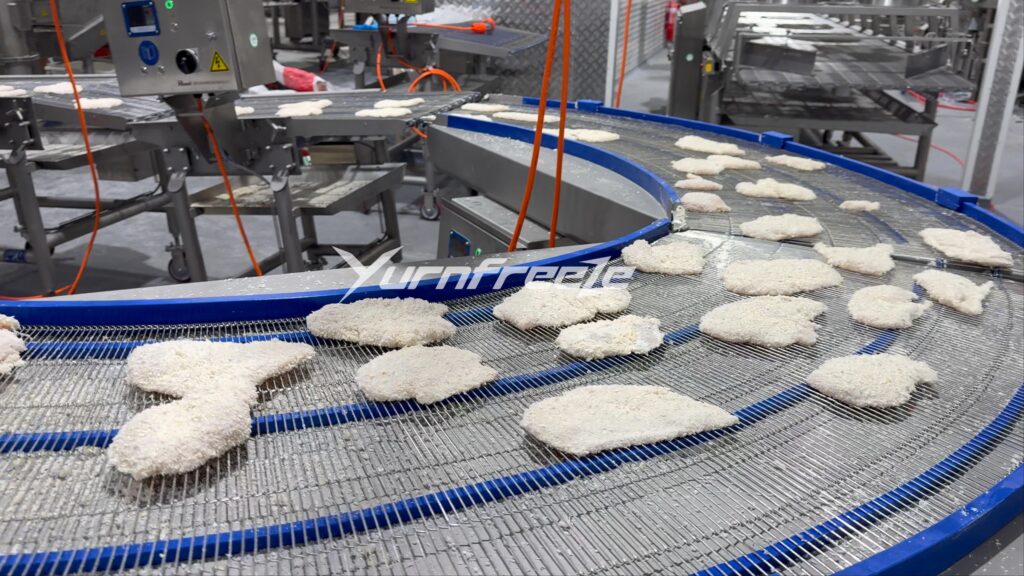
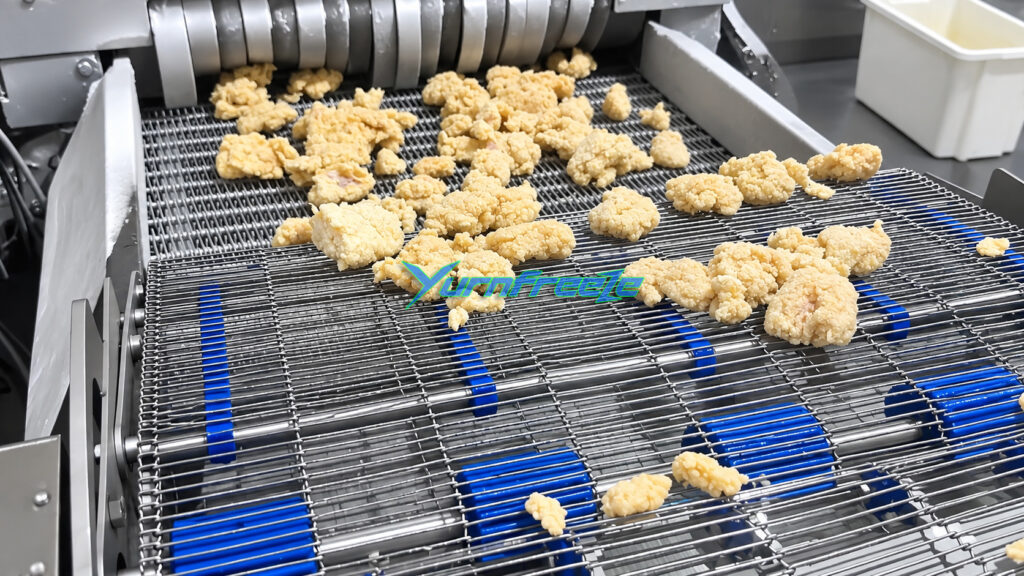
This case illustrates how one spiral freezing system can serve multiple related poultry product applications when product characteristics, freezing processes, and hygiene requirements have been properly evaluated. However, actual suitability still needs to be verified against product thickness, coating characteristics, loading density, and freezing time. Similar product categories alone do not guarantee that the same equipment settings will work for every product.
Project details: Yurnfreeze Australia – Self-Stacking Spiral Freezer
4.2 When Are Dedicated Freezers a Better Investment?
Separate freezing systems may be more appropriate under the following conditions:
- Different products have significantly different freezing characteristics.
- One product requires fluidized bed freezing, while another requires conventional conveyor freezing.
- Production volumes are high enough to justify dedicated continuous production lines.
- Allergen management or segregation between raw and ready-to-eat products requires stricter separation.
- Frequent changeovers reduce the utilization of a shared freezer.
- The company expects to expand production capacity for a specific product category in the future.
It is important to distinguish equipment versatility from actual production efficiency. A freezer that is technically capable of processing many products is not necessarily the most economical choice for every production environment.
5. How Does Yurnfreeze Address Multi-Product Freezing Applications?
Multi-product freezing projects involve more than selecting a standard equipment model. They require a comprehensive engineering assessment based on product characteristics, processing conditions, and factory layout.
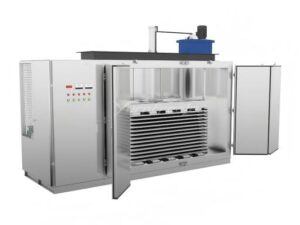
Yurnfreeze offers fluidized bed freezers, spiral freezers, plate freezers, and tunnel freezing systems, with applications across poultry, seafood, fruits and vegetables, bakery products, and prepared foods.
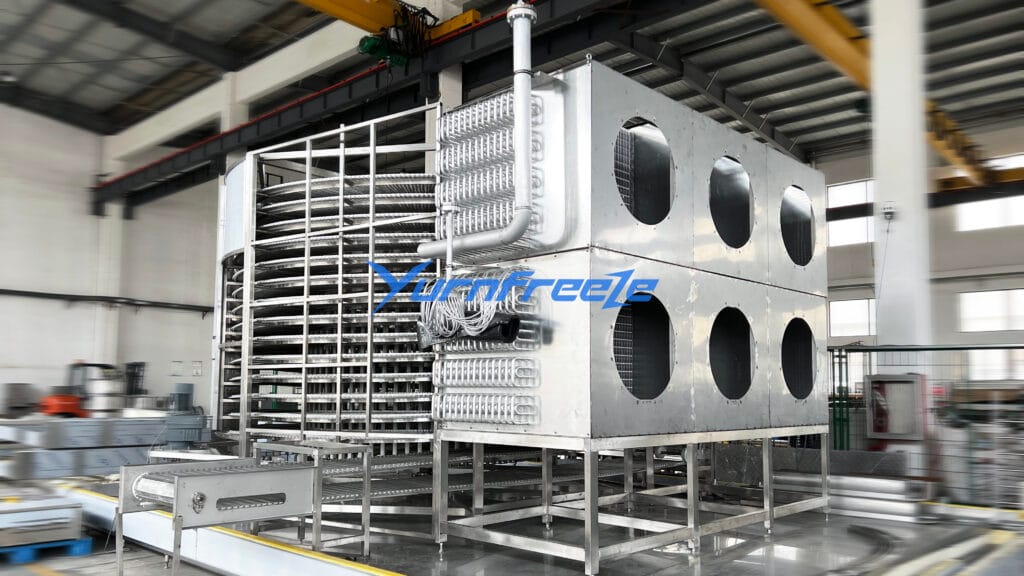
For projects involving multiple products, equipment configurations can be evaluated based on the following factors:
- Product dimensions and freezing requirements
- Required hourly processing capacity for each product
- Conveyor belt width and loading arrangements
- Available installation space within the factory
- Existing refrigeration infrastructure
- Cleaning and defrosting requirements
For example, when different products require different loading or conveying arrangements, multi-level tunnel configurations and customized conveyor solutions may be considered.
Yurnfreeze’s spiral freezer range also includes single-drum, double-drum, and self-stacking designs, which can be matched to different production capacities, factory space constraints, and product conveying requirements.
The objective is not to make one machine suitable for every possible food product. Instead, it is to identify which products can efficiently share one freezing system and where dedicated equipment can deliver a better long-term return on investment.
6. Final Considerations: Flexibility Should Not Come at the Expense of Efficiency
Using one industrial freezer for multiple food products can reduce initial capital investment and potentially improve equipment utilization.
However, the final decision must take into account product compatibility, freezing performance, hygiene requirements, production scheduling, and overall operating costs.
For products with similar freezing characteristics, a properly designed spiral freezer or tunnel freezer can provide an effective multi-product freezing solution.
For products with significantly different physical properties or freezing requirements, separate equipment may offer better advantages in production stability, hygiene management, and long-term economics.
The best multi-product freezing solution is not necessarily the machine that can process the largest number of products. It is the system that can process the intended products consistently, safely, and economically.
FAQ
1. Can one spiral freezer process chicken, seafood, and other types of food?
Yes, but the freezing characteristics and processing requirements of each product must be evaluated.
Product thickness, initial temperature, target core temperature, freezing time, and loading density all influence equipment configuration and operating parameters.
For example, portioned chicken products and breaded poultry products may be processed using the same spiral freezer in certain applications. However, fish fillets and shrimp may have different freezing time and hygiene requirements. Whether they can share the same equipment should be confirmed through product testing and process validation, rather than determined solely by product category.
2. Does a shared freezer need to be stopped and cleaned every time the product changes?
This depends on product characteristics, food safety requirements, and the factory’s hygiene management procedures.
If different products involve raw-to-ready-to-eat cross-contamination risks, different allergen profiles, raw material residues, or other contamination concerns, appropriate cleaning, sanitation, and changeover verification procedures must be established.
Some changeovers may require a complete cleaning procedure rather than simply removing visible product residues.
During equipment design, factors such as internal cleanability, drainage, maintenance access, and the need for CIP (Clean-in-Place) or other suitable cleaning systems should be considered. The actual cleaning time should also be included in production scheduling.
3. Can one freezer continuously process multiple products, or must products be processed in separate batches?
This depends on equipment design, compatibility between product processes, and production management arrangements.
If different products require significantly different freezing times, conveyor speeds, or temperature conditions, processing them in separate batches is generally easier for maintaining product quality and production stability.
Even when the equipment supports continuous operation, product changeovers still need to account for line clearance, cleaning, parameter adjustments, and quality verification of the first products after the changeover.
Factories handling many product types in small batches should pay particular attention to changeover frequency and its impact on effective production time.
4. Can sharing one freezer for multiple products affect freezing quality?
Yes, it can, but this is not inevitable. The key factor is whether the equipment has been designed around representative product operating conditions.
If a freezer is selected based on only one product’s dimensions, loading density, and freezing time, it may experience uneven freezing, unstable discharge temperatures, or reduced processing capacity when handling other products.
During equipment selection, it is advisable to evaluate challenging products, such as those with greater thickness, higher individual weight, longer freezing time requirements, or greater sensitivity to quality changes. Actual product testing should then be used to verify the equipment’s operating range.
5. Is one shared freezer always more economical than purchasing multiple dedicated freezers?
No. A shared freezer can reduce initial equipment investment, floor space requirements, and some supporting refrigeration infrastructure costs. However, it may also increase changeover cleaning time, production scheduling complexity, and equipment idle time.
For factories with relatively few product categories, large production batches, and stable production schedules, a shared freezer may offer better economic value.
If a factory handles many product types, has frequent changeovers, or faces significantly different freezing and hygiene requirements, dedicated equipment may provide better production efficiency.
A proper comparison should consider equipment investment, operating energy consumption, labor, cleaning costs, lost production time, and maintenance expenses over the equipment’s lifecycle, rather than focusing only on the equipment quotation.