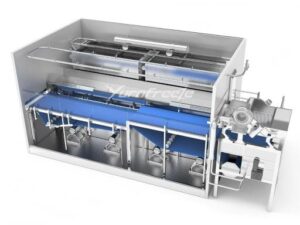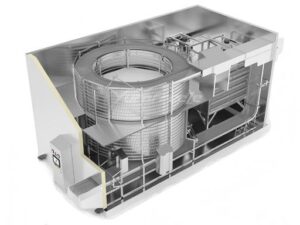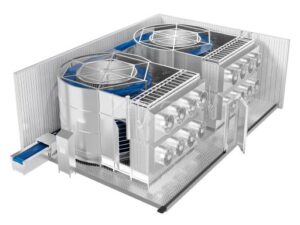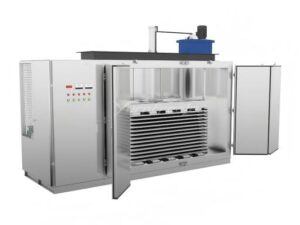


In industrial food freezing, spiral freezers are widely used for continuous freezing of meat, poultry, seafood, bakery products, and prepared foods. Traditional drum spiral freezers have an established mechanical design backed by decades of industrial application. Self-stacking spiral freezer technology, by contrast, changes the way the conveyor belt is supported and operates, reducing the need for certain conventional mechanical components.
For food manufacturers planning to purchase new equipment or upgrade existing production lines, the differences between these two designs extend beyond mechanical construction. They can also affect routine cleaning, mechanical maintenance, production downtime, and long-term operating costs.
Does a self-stacking design necessarily offer better economics than a traditional drum design? The answer requires an evaluation of the equipment over its entire service life.
1. Key Structural Differences Between the Two Spiral Freezer Designs
The primary difference between the two designs lies in how the spiral conveyor belt is supported and driven.
1.1 Traditional Drum Spiral Freezer
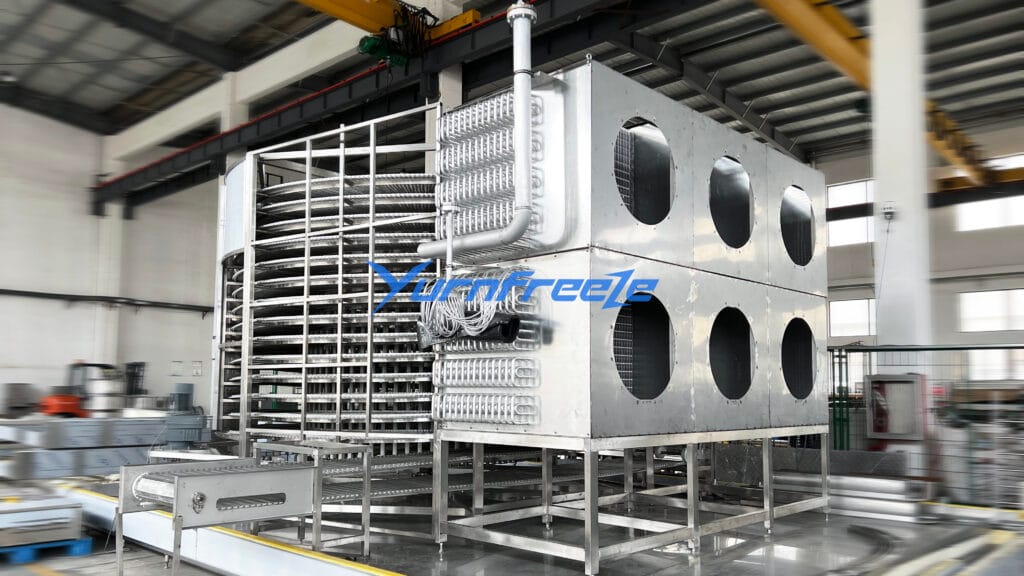
A traditional drum spiral freezer typically uses a central rotating drum in combination with a spiral conveyor belt. The belt travels around the central drum, forming multiple spiral tiers, with the drum, guiding structures, and associated drive mechanisms supporting continuous operation.
Its typical characteristics include:
- A central drum provides the main structural support.
- The conveyor belt travels along a multi-tier spiral track.
- Sliding guides or support components are generally required to maintain the belt’s position and running path.
- The mechanical design has a long history of industrial application and is widely used in continuous freezing operations.
The main advantages of this design are its established mechanical configuration and well-understood operating principles, making it suitable for a wide range of continuous freezing applications.
However, continuous mechanical contact occurs between the drum, guiding components, and conveyor belt. Over extended operating periods, friction, component wear, and the maintenance of these contact areas require attention.
1.2 Self-Stacking Spiral Freezer
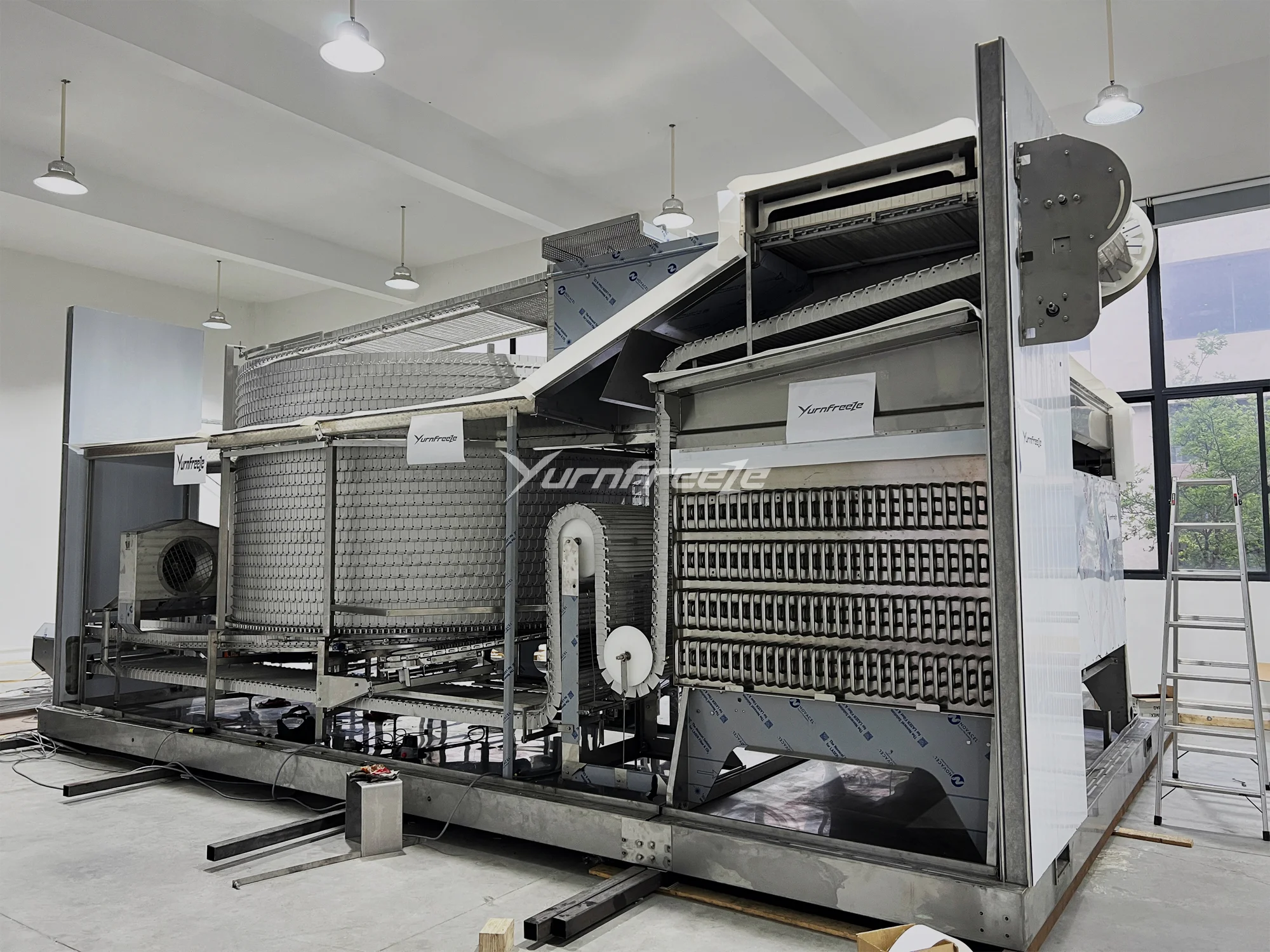
A self-stacking spiral freezer uses a different conveyor support principle. Through its structural design, the conveyor belt forms multiple stacked spiral tiers, with adjacent belt layers working together to support the spiral configuration. This eliminates the need for a conventional central drum and certain associated sliding guide structures.
Its main characteristics include:
- Multiple spiral tiers are supported through the conveyor belt’s self-stacking structure.
- Dependence on conventional central drums and certain sliding guide components is reduced.
- Dedicated drive and motion control systems maintain stable conveyor operation.
- The structural arrangement provides different possibilities for internal cleaning access and maintenance design.
It is important to note that self-stacking does not mean there is no mechanical contact or wear. The conveyor belt, drive mechanism, chains, and other transmission components still require inspection and maintenance according to the specific equipment design.
Fundamentally, the difference between these two designs lies in their mechanical support principles and motion control systems, rather than simply representing old and new equipment technologies.
2. How Does Mechanical Design Affect Long-Term Maintenance Costs?
Equipment maintenance costs depend not only on the number of components but also on their wear characteristics, replacement complexity, maintenance intervals, and the production impact of equipment failures.
| Comparison | Traditional Drum Spiral | Self-Stacking Spiral |
|---|---|---|
| Main support structure | Central drum and spiral guiding structures | Self-stacking conveyor belt |
| Sliding guide components | Generally present | Traditional sliding guides can be reduced or eliminated |
| Mechanical contact | Contact between conveyor belt and guiding structures | Dedicated stacking and running mechanism |
| Main maintenance areas | Drum, guide components, conveyor belt, and drive system | Conveyor belt, drive mechanism, and motion control system |
| Wear management | Attention to guide components and contact areas | Attention to stacking contact areas and drive components |
| Maintenance requirements | Depend on the specific design and operating conditions | Also require regular inspection and preventive maintenance |
Maintenance of traditional drum spiral freezers generally involves the central drum, guiding components, conveyor belt, and associated drive system. As operating hours accumulate, wear in mechanical contact areas may affect conveyor stability and running performance.
By reducing certain conventional sliding guide components, a self-stacking design can potentially lower the inspection and replacement requirements associated with those parts.
However, this does not mean that self-stacking equipment is maintenance-free. The drive system, conveyor tracking, stacking stability, and control system still require professional maintenance.
From a long-term operational perspective, the more meaningful comparison involves actual maintenance frequency, spare parts costs, repair labor, and production downtime under real operating conditions, rather than simply counting mechanical components.
Industrial freezing systems operate under demanding conditions, often for extended production hours. Equipment accessibility, planned inspections, and preventive maintenance therefore play an important role in maintaining operational reliability. These considerations are also addressed in ASHRAE’s guidance on industrial food-freezing systems.
3. Cleaning Accessibility and CIP: An Important Design Difference
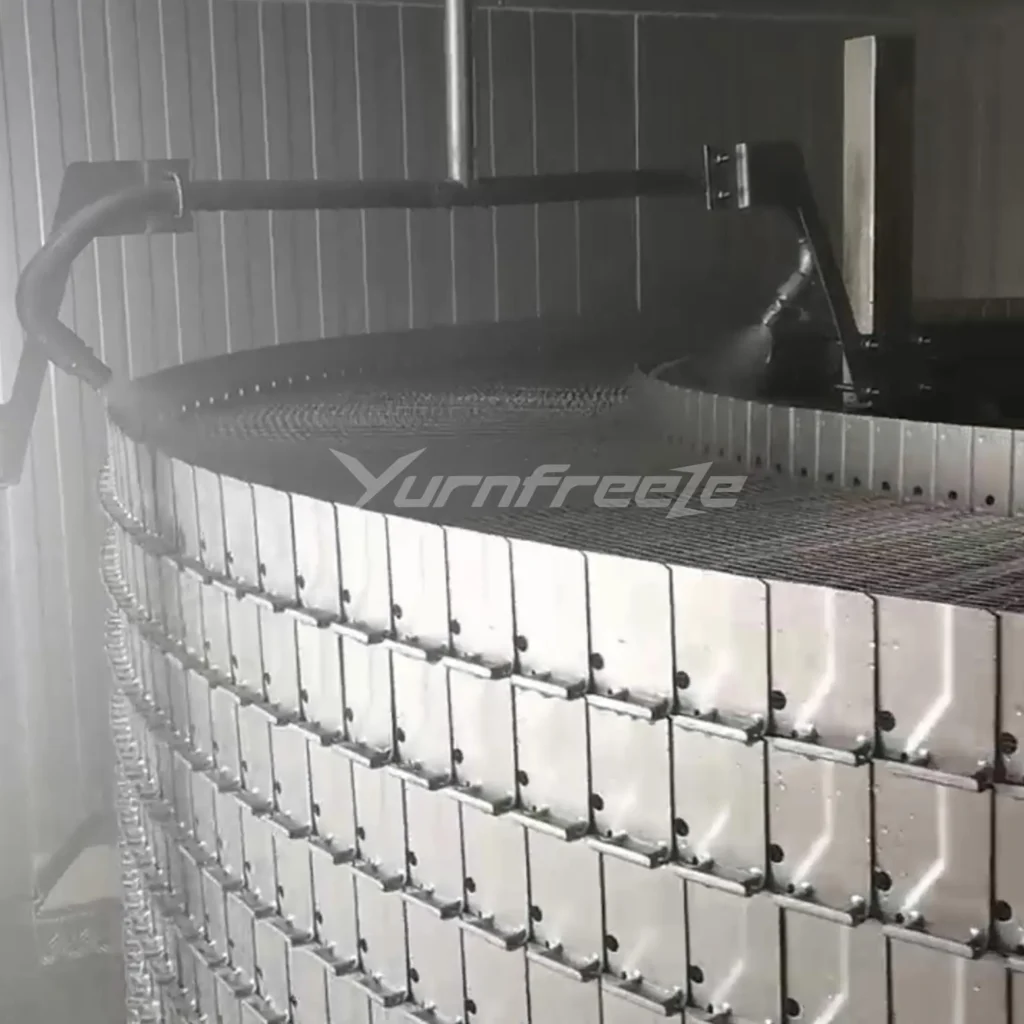
In food processing environments handling meat, poultry, seafood, and other products with demanding hygiene requirements, equipment cleanability directly affects food safety management, sanitation procedures, and equipment availability. The FDA’s Current Good Manufacturing Practices (CGMPs) provide regulatory guidance on sanitary operations, equipment maintenance, and facility sanitation.
Traditional drum spiral freezers contain a central drum, support structures, guiding components, and multiple conveyor tiers. These structures can create relatively confined spaces where cleaning access may be limited. Particular attention is often required around the central drum, underneath the conveyor belt, and near mechanical connection points.
By reducing certain conventional support and sliding guide components, a self-stacking design can improve access to some internal areas when properly engineered.
However, cleaning performance is not determined by mechanical structure alone. It also depends on several factors:
- Whether the conveyor belt and mechanical structures create inaccessible cleaning areas.
- Whether the spray system provides adequate coverage of both the upper and lower belt surfaces.
- Whether water and cleaning agents can reach critical mechanical areas.
- Whether the drainage system prevents water accumulation.
- Whether the cleaning program covers all required product-contact surfaces.
CIP (Clean-in-Place) is an important consideration when evaluating the hygienic design of modern spiral freezers.
A complete CIP system typically integrates spray devices, cleaning pipelines, drainage arrangements, automatic control sequences, and the equipment’s mechanical layout. Simply installing spray pipes does not necessarily mean that a machine has sufficient automated cleaning capability.
For self-stacking spiral freezers, the simplified structural arrangement can provide greater flexibility in CIP system design. Nevertheless, actual cleaning performance must still be verified through practical cleaning tests.
4. Vertical Airflow Design and Freezing Performance
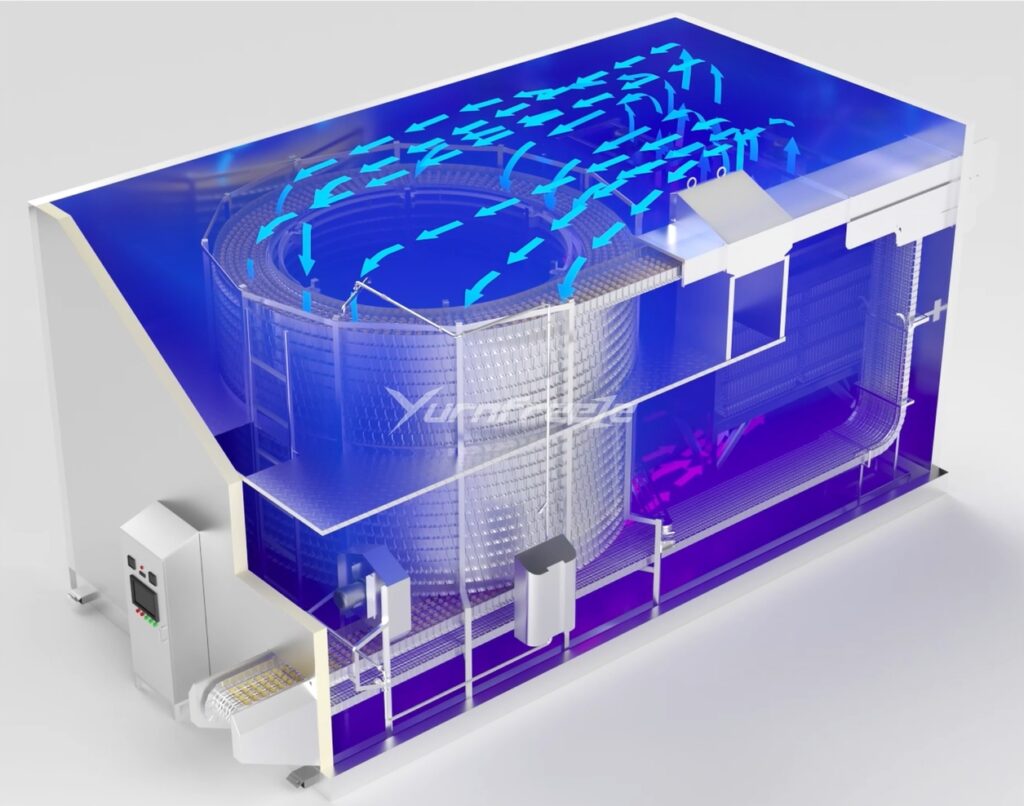
In addition to mechanical construction, airflow distribution is another important factor influencing the long-term operating value of a spiral freezer.
Both traditional drum spiral freezers and self-stacking spiral freezers can incorporate different air delivery configurations. Their actual freezing performance depends on fan arrangements, air duct design, evaporator positioning, conveyor structure, and product loading conditions.
Some self-stacking spiral freezer designs use vertical airflow to direct cold air through multiple conveyor tiers and the product zone.
The main design objectives include:
- Improving airflow distribution between different conveyor tiers.
- Reducing airflow bypass in certain areas.
- Minimizing freezing variations between products at different positions.
- Improving the utilization of the effective heat transfer area.
However, vertical airflow is not exclusive to self-stacking spiral freezers, and airflow direction alone cannot determine freezing performance.
Actual results must be evaluated in combination with product thickness, inlet temperature, belt speed, loading density, air velocity, evaporating temperature, and the overall thermal load of the equipment.
For factories requiring long hours of continuous production, consistent and stable freezing performance is generally more important than simply achieving a higher instantaneous air velocity.
5. Total Cost of Ownership (TCO): Why Purchase Price Is Not the Only Factor
Determining which spiral freezer offers better long-term value requires an evaluation of its Total Cost of Ownership (TCO).
The actual cost of equipment generally consists of several components.
5.1 Initial Investment
This includes the equipment itself, refrigeration system, conveyor belt, control system, installation, and commissioning costs.
Self-stacking spiral freezers may incorporate more specialized conveyor structures and motion control systems. Therefore, their initial purchase prices should not automatically be assumed to be lower.
5.2 Routine Maintenance Costs
These include mechanical inspections, lubrication, component replacement, maintenance labor, and spare parts inventory.
For traditional drum designs, attention is required for wear on the central drum and guiding components. For self-stacking designs, maintenance considerations include conveyor stacking performance and the drive system.
5.3 Cleaning and Sanitation Costs
These include water consumption, cleaning chemicals, labor, energy consumption, and production time lost during cleaning operations.
If an equipment design reduces inaccessible cleaning areas or shortens cleaning time, it may improve overall equipment availability and production utilization.
5.4 Downtime and Production Losses
Equipment failures and cleaning operations can both affect production schedules.
For high-capacity food processing plants operating continuously, even relatively short periods of additional downtime can result in significant economic losses.
5.5 Energy and Operating Costs
These include electricity consumption by fans, motors, refrigeration systems, and other auxiliary equipment.
Energy consumption differences should be compared under equivalent conditions, including the same product, processing capacity, inlet and outlet temperatures, and ambient conditions. Mechanical structure alone is not sufficient to determine which design is more energy-efficient.
The overall TCO can therefore be expressed as:
TCO = Initial Investment + Energy Costs + Maintenance Costs + Cleaning Costs + Downtime Losses + Other Operating Costs
For production lines operating continuously over many years, maintenance, cleaning, and downtime costs can be just as important as the initial purchase price and may account for a substantial proportion of cumulative lifetime expenditure. These factors are also covered in the ASHRAE and U.S. Department of Energy Refrigeration Commissioning Guide.
6. Real-World Application: Operational Experience with Self-Stacking Technology
When evaluating newer spiral freezing technologies, actual operating projects can provide more useful insights than structural descriptions alone.
One example is the SSFS-500 self-stacking spiral freezer supplied by Yurnfreeze to CP Vietnam. The equipment was installed for continuous food freezing operations.
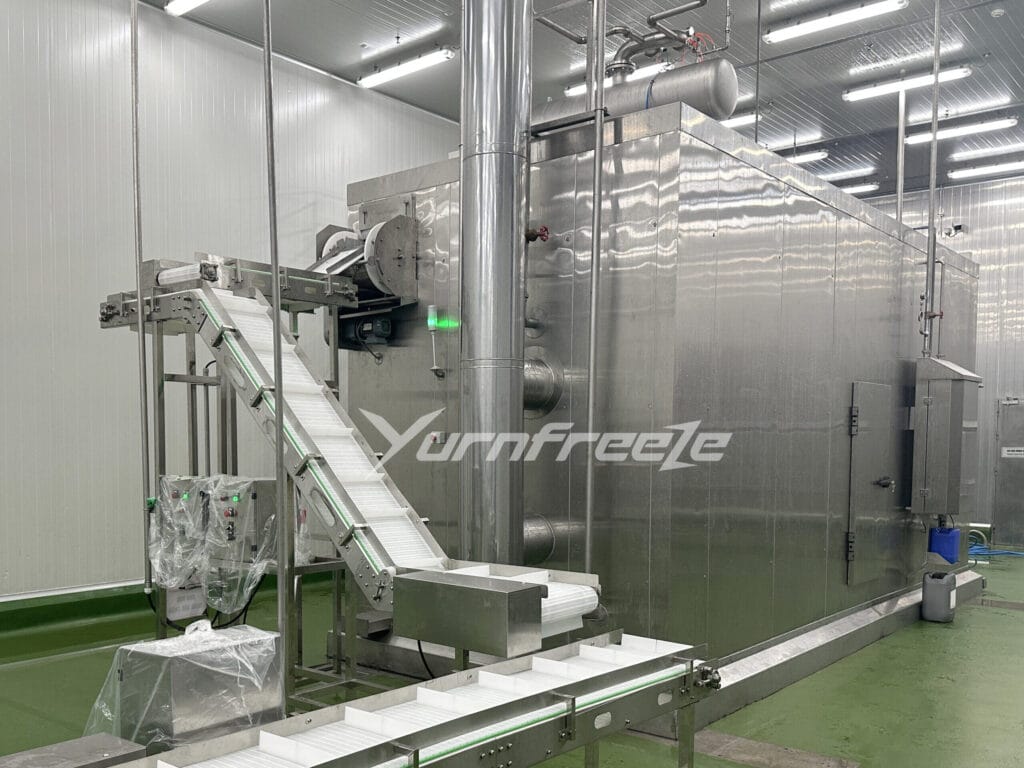
According to the project operating records:
- Full-load processing capacity reaches 800 kg/h.
- An integrated CIP cleaning system is installed.
- Following a single cleaning cycle, swab testing was conducted to verify the cleanliness of the relevant areas.
- The equipment has operated for more than one year, with no equipment breakdowns recorded during the first year.
The project also incorporates a vertical airflow design and eliminates conventional sliding guide structures, reducing certain mechanical contact components.
This application demonstrates why self-stacking technology should be evaluated not only through its mechanical design but also through actual production loading, cleaning validation, and long-term operating records.
It should be emphasized that the operating results of a single project cannot represent the performance of every self-stacking spiral freezer or replace standardized testing between different equipment designs. However, they provide practical reference points for evaluating cleanability, operational stability, and maintenance requirements.
7. Which Spiral Freezer Design Is Better for Long-Term Operation?
Both designs have their own application scenarios. The selection should be based on the factory’s production requirements rather than equipment type alone.
Traditional drum spiral freezers may be suitable for:
- Production lines where existing drum spiral equipment has demonstrated stable performance.
- Factories with established experience and maintenance systems for conventional spiral structures.
- Projects where existing technical standards and spare parts systems need to be retained during equipment replacement.
- Applications where equipment budget and initial investment are major constraints.
Self-stacking spiral freezers are worth considering for:
- Food processing environments with demanding requirements for internal cleaning accessibility.
- Factories operating long production shifts where downtime is a significant concern.
- Projects aiming to reduce conventional sliding guide components and associated maintenance work.
- New installations or upgrades requiring improved hygienic design and automated cleaning processes.
When replacing an existing imported spiral freezer, additional technical considerations include the original equipment’s installation dimensions, inlet and outlet directions, conveyor width, processing capacity, refrigeration connections, and control system.
An equipment upgrade should not focus exclusively on freezing performance. Compatibility with the existing production line and factory infrastructure is equally important.
Conclusion
The long-term value of self-stacking and traditional drum spiral freezers depends on their mechanical design, cleaning accessibility, maintenance requirements, operational stability, and actual production conditions.
Traditional drum spiral freezers have an established industrial application history. Self-stacking designs, by changing the conveyor support principle, reduce certain conventional mechanical contact components and offer alternative approaches to cleaning accessibility and maintenance design.
For food manufacturers prioritizing continuous production, hygienic operation, and maintenance efficiency, self-stacking technology deserves consideration during equipment selection.
Ultimately, the right choice should be based on the actual equipment configuration, operating data, and a comprehensive Total Cost of Ownership analysis, rather than equipment terminology or initial purchase price alone.
FAQs
1. What is the main difference between a self-stacking spiral freezer and a traditional drum spiral freezer?
The main difference lies in the conveyor belt support system. A traditional drum spiral freezer relies on a central drum and guiding structures to support conveyor operation, while a self-stacking spiral freezer uses the conveyor belt’s own structural design to form and support multiple spiral tiers, reducing dependence on conventional central drums and certain sliding guide components.
2. Does a self-stacking spiral freezer have lower maintenance costs?
Under certain design conditions, a self-stacking structure can reduce wear associated with conventional sliding guide components and related mechanical contact areas, potentially lowering the inspection and replacement requirements for some parts. However, the conveyor belt, drive mechanism, and motion control system still require regular inspection and maintenance. Actual maintenance costs also depend on equipment design, operating hours, product loading, and maintenance practices.
3. Is a self-stacking spiral freezer easier to clean than a traditional drum spiral freezer?
In some equipment designs, a self-stacking structure reduces the central drum and certain guiding components, improving access to internal areas and providing more flexibility for CIP system integration. However, actual cleaning performance also depends on internal geometry, spray coverage, drainage design, and cleaning procedures. It cannot be determined by mechanical structure alone.
4. Does a self-stacking spiral freezer consume less energy?
Not necessarily. Energy consumption is influenced by airflow distribution, fan power, refrigeration system efficiency, insulation performance, product loading, and operating conditions. Some self-stacking designs incorporate optimized vertical airflow to improve cold air distribution and heat transfer. However, actual energy savings should be verified through operating data under equivalent production conditions.
5. How should food manufacturers compare the long-term costs of the two spiral freezer designs?
A comprehensive evaluation should consider Total Cost of Ownership (TCO), including:
- Initial investment: Equipment purchase, transportation, installation, and commissioning.
- Energy costs: Electricity consumption by fans, motors, and refrigeration systems.
- Maintenance costs: Routine inspections, labor, and spare parts.
- Cleaning costs: Water, cleaning chemicals, labor, and energy consumption.
- Downtime losses: Production losses resulting from equipment failures, repairs, and cleaning operations.
Comparing these costs over the expected equipment service life provides a more realistic assessment of long-term economic value than comparing initial purchase prices alone.
6. Can a self-stacking spiral freezer replace an existing traditional drum spiral freezer?
Yes, but replacement requires an engineering assessment of the existing production line. Key considerations include installation space, conveyor width, processing capacity, inlet and outlet positions, refrigeration connections, electrical systems, and upstream and downstream equipment layouts.
With appropriate structural design and engineering adaptation, a new freezer may be integrated into the existing production line without requiring a complete production line rebuild.
For replacement projects involving existing imported spiral freezers, Yurnfreeze provides equipment measurement and surveying, structural benchmarking, engineering design, and customized replacement solutions.
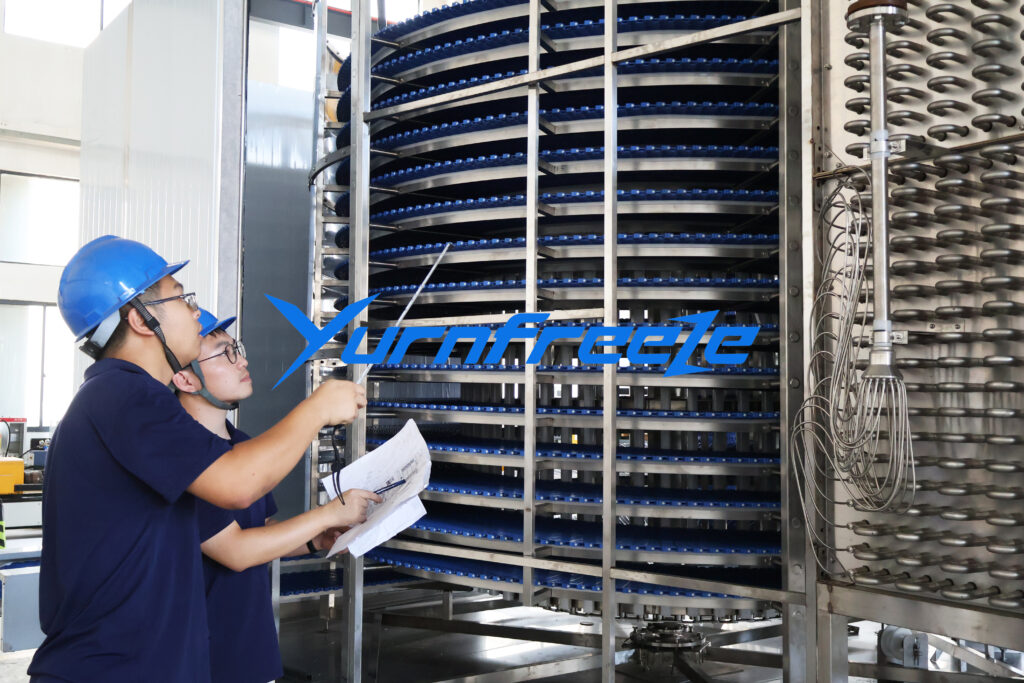
Based on the original equipment’s dimensions, mechanical configuration, processing capacity, conveyor parameters, and connection interfaces, Yurnfreeze can evaluate the existing installation and develop an adapted replacement solution, aiming to retain as much of the existing factory layout, refrigeration infrastructure, and upstream and downstream equipment as practical.
For projects upgrading from traditional drum structures to self-stacking technology, further engineering assessments can cover conveyor support arrangements, drive systems, airflow distribution, and automated cleaning systems. This approach can help reduce the complexity and investment requirements of a complete production line modification.
The feasibility of each replacement project must ultimately be determined through an engineering assessment of the original equipment and actual site conditions.