

Why do some foods lose moisture, crack, stick together, or suffer from poor texture after quick freezing? The problem may not lie in the raw materials themselves, but in the freezing process.
Food quick freezing is not simply a matter of using lower temperatures or extending freezing time. In this article, we take an in-depth look at the three most common quick-freezing mistakes made by food manufacturers, including proper freezing temperatures, freezing durations, freezing methods for different food categories, and equipment selection advice for spiral freezers and tunnel freezers. The goal is to help food processors improve product quality while reducing product loss and energy consumption.
Mistake 1: Does a Lower Freezing Temperature Always Mean Better Freshness Preservation?
No. The essence of food quick freezing is not to continuously lower the temperature, but to move products through the Maximum Ice Crystal Formation Zone as quickly as possible.
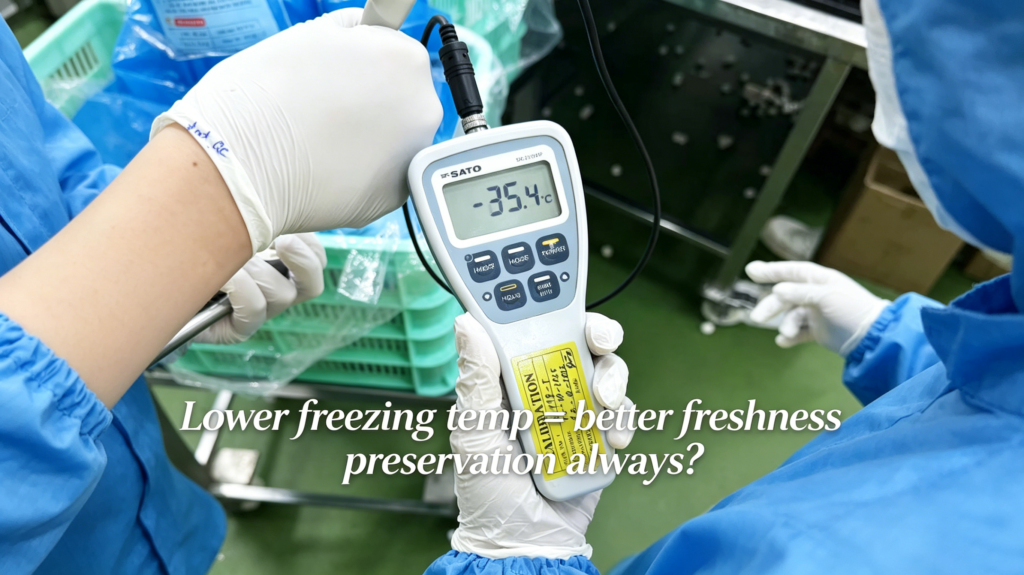
Many food manufacturers assume that the lower the temperature, the faster the freezing process, and therefore the better the final product quality. As a result, they continue to reduce the operating temperature of their equipment—from -30°C to -35°C, or even down to -45°C.
However, they often discover that:
- Electricity costs increase significantly
- Equipment operating loads become higher
- Frost accumulation becomes more severe
- Product quality shows little or no noticeable improvement
Why Doesn’t a Lower Temperature Always Produce Better Results?
Because the factor that truly determines food quality is not the lowest temperature achieved, but how ice crystals are formed during freezing.
Water contained within food products is most likely to form ice crystals within the temperature range of -1°C to -5°C. If food remains within this range for an extended period, large and sharp ice crystals can develop. These crystals can directly damage the cellular structure of the product.
Therefore, the key to preserving product quality lies in passing through the Maximum Ice Crystal Formation Zone as rapidly as possible, rather than pursuing excessively low temperatures.
Recommended Quick-Freezing Temperature Ranges for Different Foods
Seafood and Aquatic Products
Rapid deep-freezing at approximately -35°C to -40°C is generally recommended. This helps minimize drip loss and reduce damage to protein structures.
Bakery Products and Prepared Foods
For products such as dough-based foods and ready meals, a freezing temperature range of -28°C to -32°C is typically sufficient to achieve the desired product quality while maintaining reasonable energy efficiency.
Fruits and Vegetables
Fruit and vegetable products require a greater emphasis on rapid freezing combined with precise temperature control to prevent discoloration, softening, and tissue damage.
How Does Yurnfreeze Solve the Problems of Inadequate Freezing Performance and High Operating Costs?
Compared with traditional freezing approaches that rely solely on extremely low temperatures, Yurnfreeze places greater emphasis on precision freezing.
Based on the specific characteristics of different products, Yurnfreeze develops customized freezing solutions by evaluating factors such as:
- Product category;
- Daily production capacity;
- Product thickness;
- Moisture content;
- Available factory space.
By matching the appropriate freezing process to each product, Yurnfreeze helps food manufacturers move more quickly through the Maximum Ice Crystal Formation Zone, thereby reducing weight loss during freezing and minimizing quality deterioration.
When implementing projects, Yurnfreeze focuses not simply on selling equipment, but on answering a more important question:
“What is the most suitable freezing method for your product?”
How Should Freezing Temperatures Be Selected?
The right temperature is more important than the lowest temperature. Different products require different freezing solutions tailored to their specific characteristics.
Mistake 2: Does a Longer Freezing Time Ensure Better Preservation?
No. The essence of food quick freezing lies in speed, not in freezing products for a longer period of time.
Many food manufacturers fall into the same misconception:
“Freezing for a longer time is safer.”
“If we extend the freezing time, the product will eventually be frozen thoroughly.”
As a result, they continuously increase the freezing duration.
However, they often find that:
- Product quality continues to decline
- Moisture loss becomes increasingly noticeable
- Energy consumption rises significantly
Why Does Slow Freezing Damage Product Quality?
During the freezing process, the water contained in food forms ice crystals. If the freezing rate is too slow, these ice crystals continue to grow larger over time.
Large ice crystals not only puncture cellular structures but also compress and damage tissue fibers, ultimately affecting the overall quality of the product.
What Is the Correct Freezing Approach?
The answer is short-duration, rapid, and uniform freezing.
By allowing products to quickly form small and evenly distributed ice crystals, manufacturers can maximize the preservation of:
- Original texture;
- Cellular structure;
- Color and flavor;
- Product yield.
At the same time, this approach helps minimize:
- Weight loss during freezing;
- Thawing loss;
- Defective product rates.
Why Do Some Factories Become Less Profitable as Production Increases?
Slow freezing does not only compromise product quality—it also directly impacts profitability.
Many companies believe they are reducing costs by minimizing their initial equipment investment. In reality, however, they may be paying much higher operating costs over the long term.
How Does Yurnfreeze Solve Problems Such as Slow Freezing, Uneven Freezing, and Low Production Capacity?
This is one of the most common concerns raised by customers when consulting Yurnfreeze.
In many cases, the issue is not that the equipment is incapable of freezing the product. Rather, the freezing efficiency does not match the requirements of the product and process.
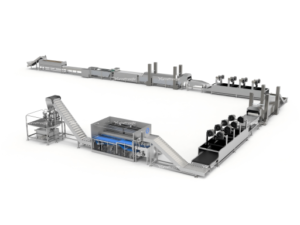
To address different freezing requirements, Yurnfreeze offers a variety of freezing solutions tailored to specific applications.
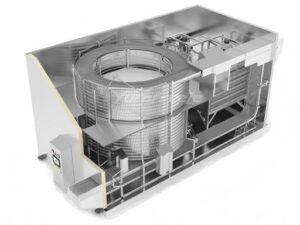
Self-Stacking Spiral Freezer Solution
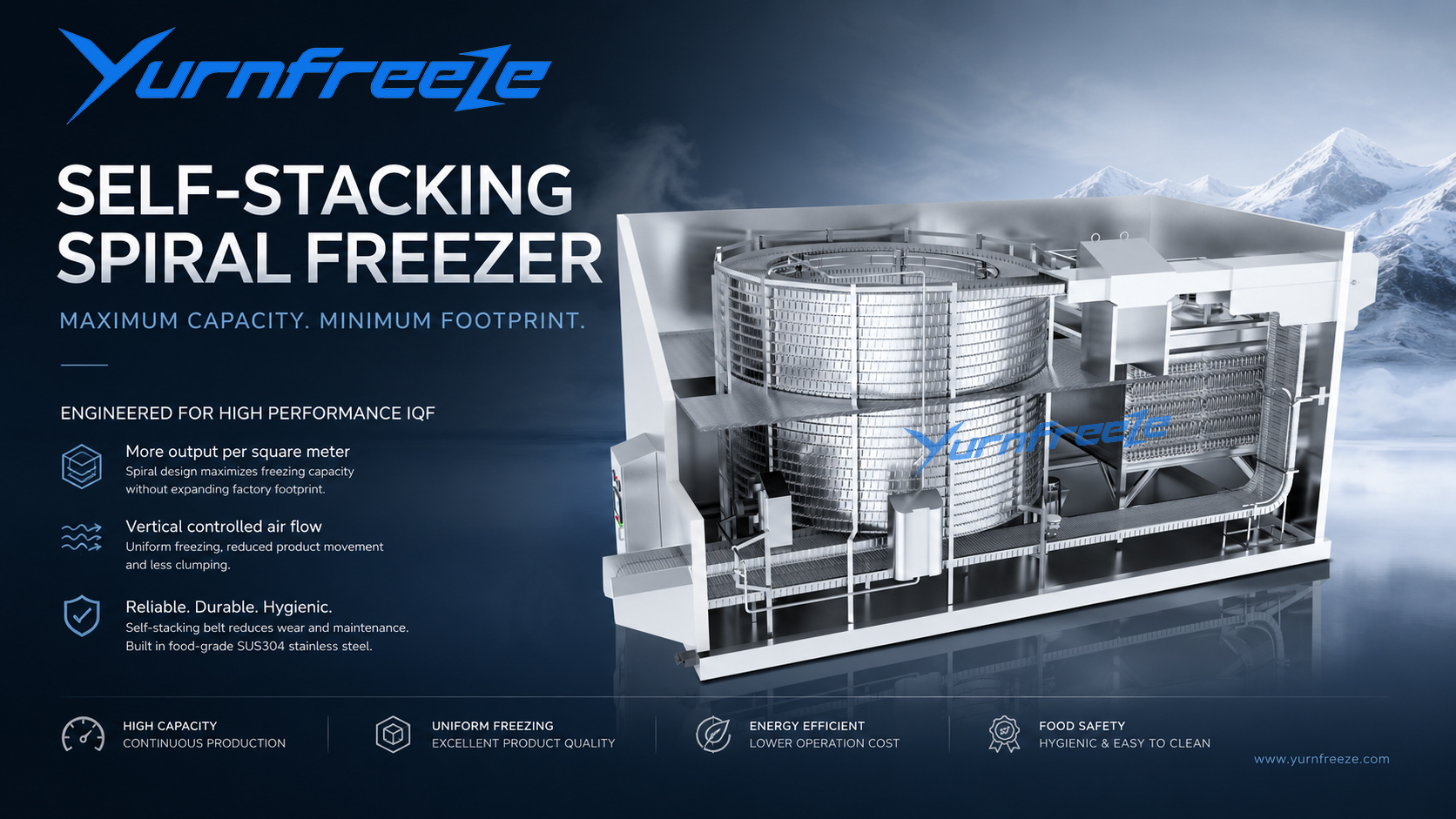
Suitable for:
- Meat processing
- Seafood products
- Bakery products and prepared foods
- High-capacity continuous freezing applications
Key Advantages:
- Smaller installation footprint
- Higher production capacity
- More uniform freezing performance
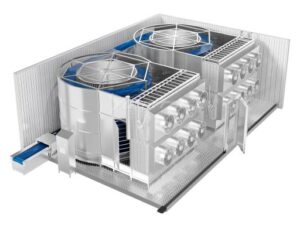
Spiral Freezer Solution
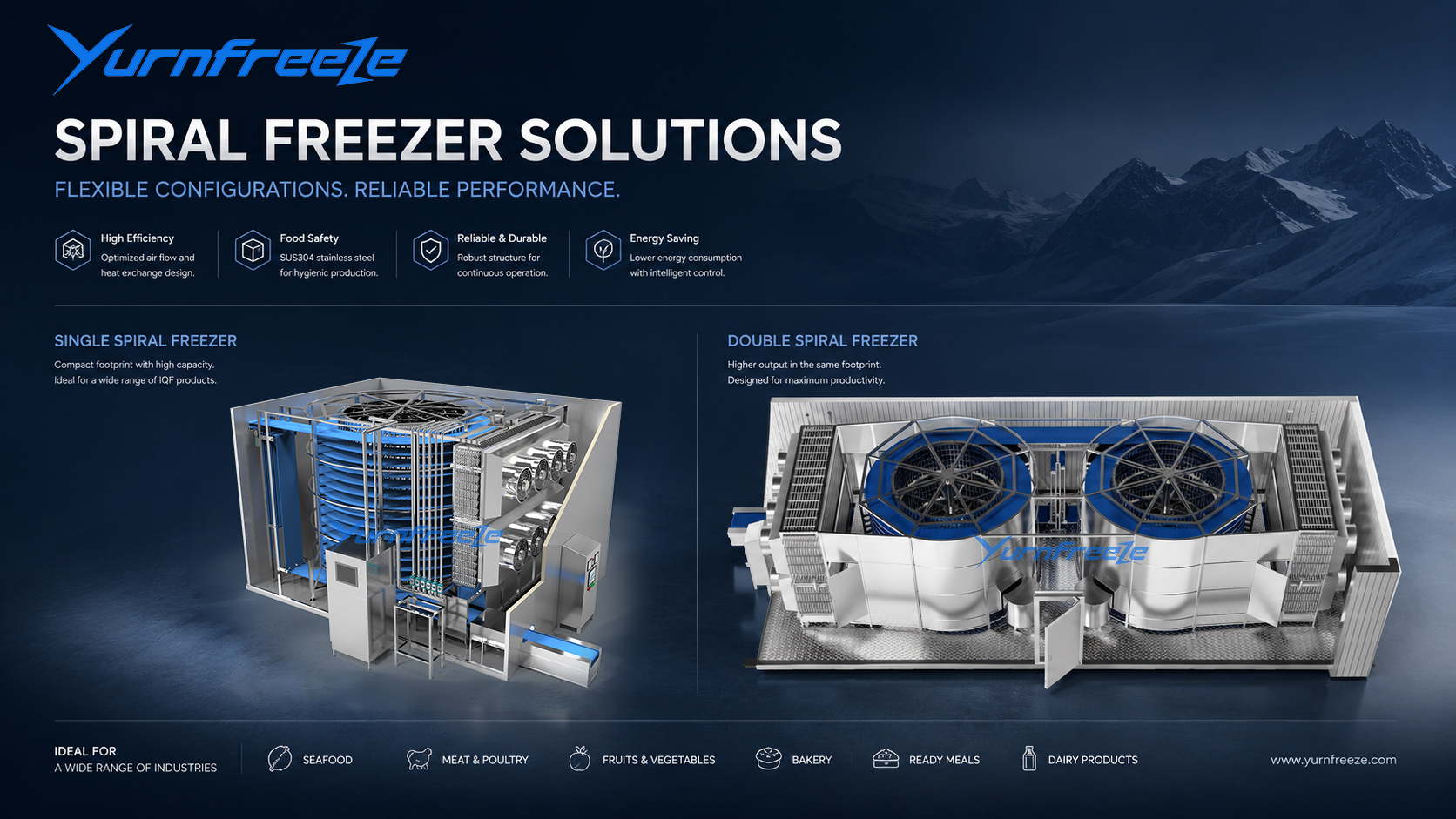
Suitable for:
- Peeled shrimp
- Meatballs
- Dumplings
- Fried chicken bites
- Small packaged food products
Key Advantages:
- Reduced floor space requirements
- Higher production output per unit area
Fluidized Bed Freezer Solution
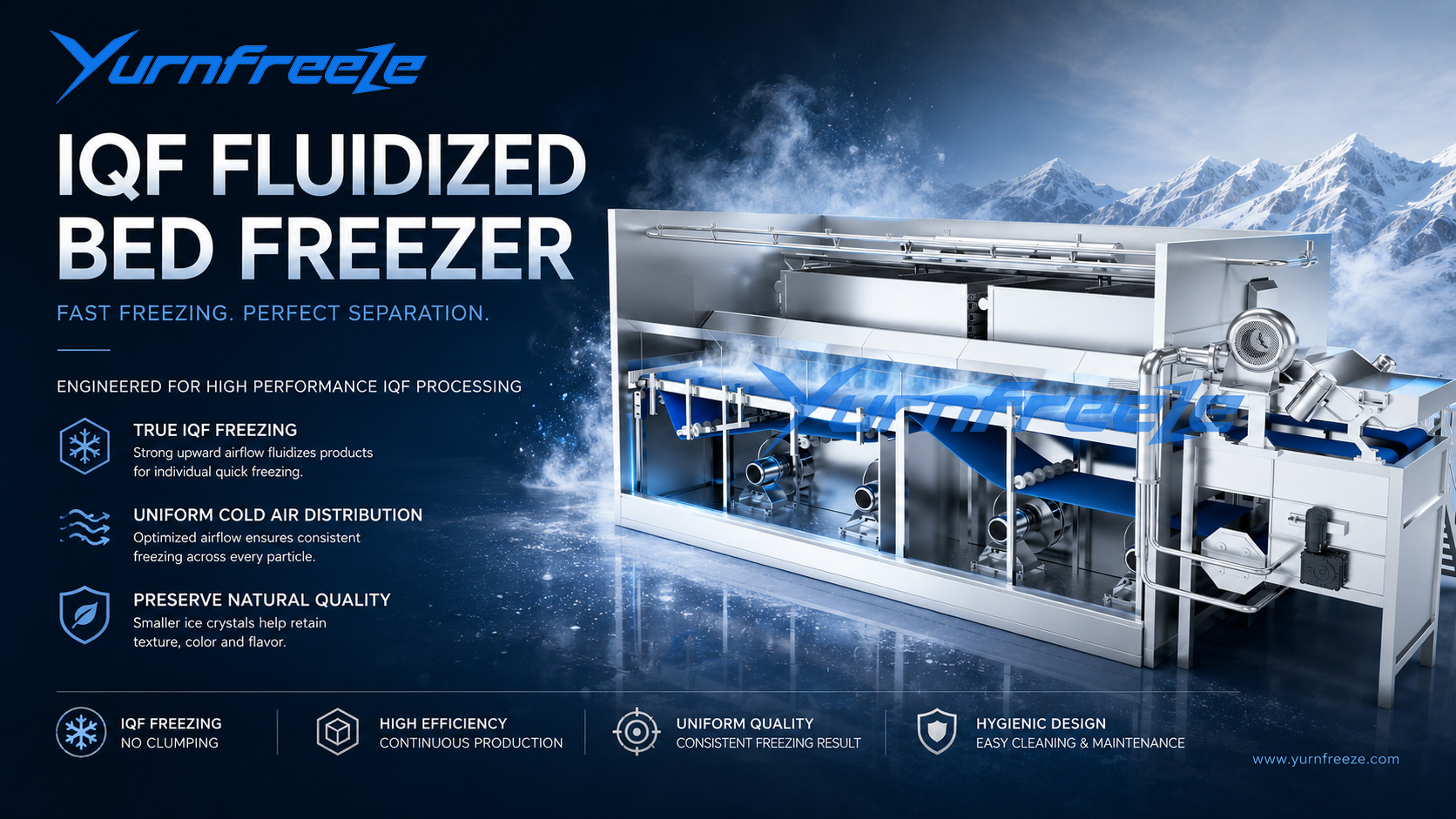
Suitable for:
- Fruits and vegetables
- Small particulate food products
- IQF (Individual Quick Freezing) applications
Key Advantages:
- Better product separation
- Reduced sticking and clumping
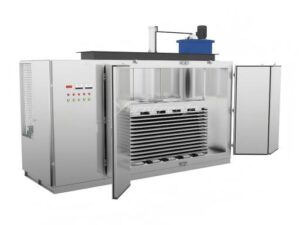
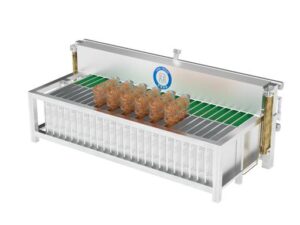
Plate Freezer Solution
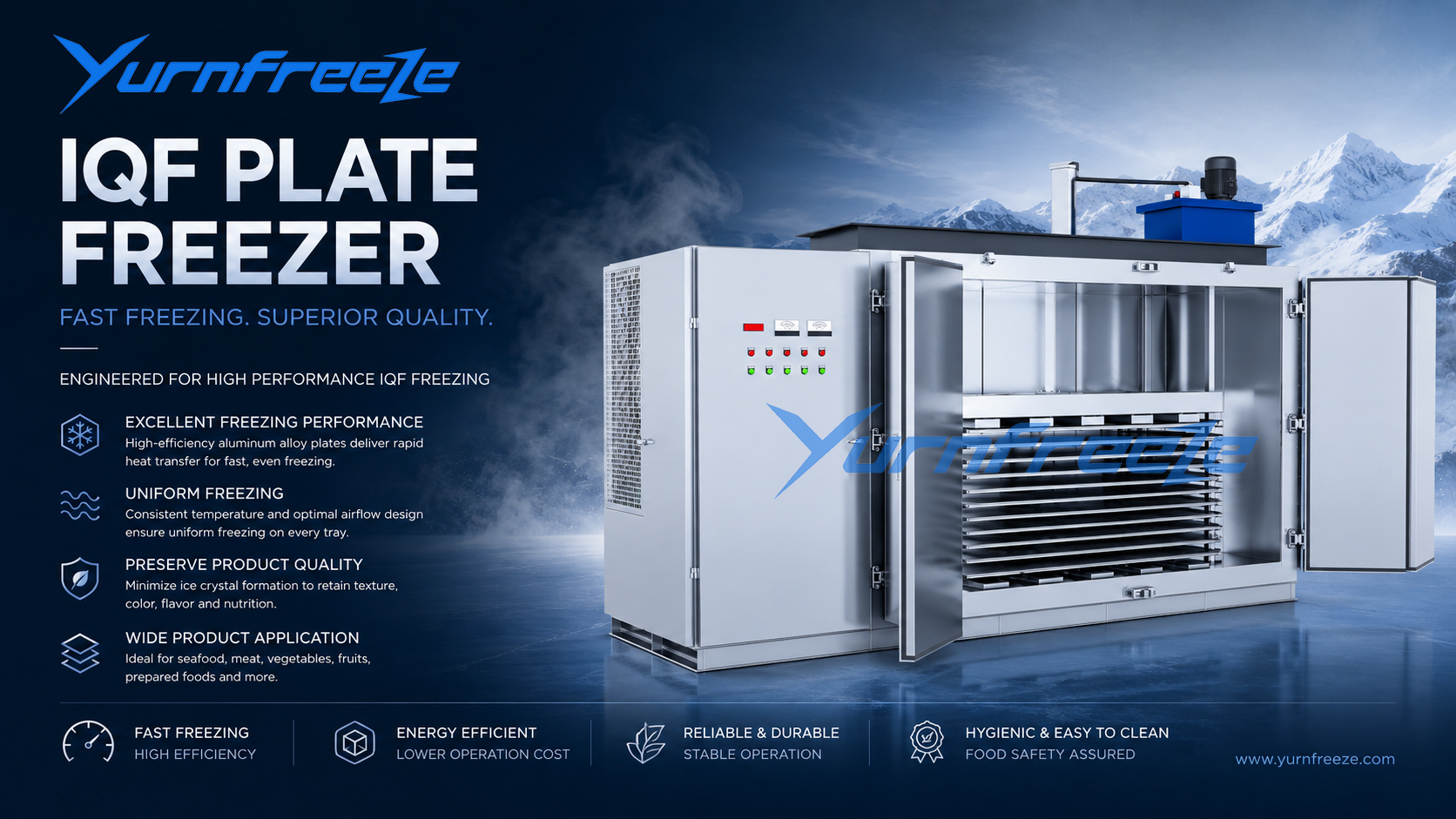
Suitable for:
- Aquatic products, including fish, shrimp, and shellfish
- Portioned meat products, such as meat blocks, chops, and minced meat blocks
- Pre-packaged foods
- High-value products requiring excellent shape and freshness preservation.
Key Advantages:
- High freezing efficiency
- Rapid freezing performance
- Excellent product shape retention.
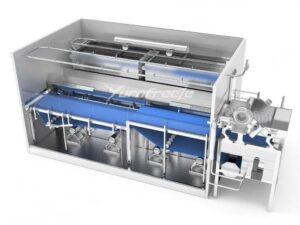
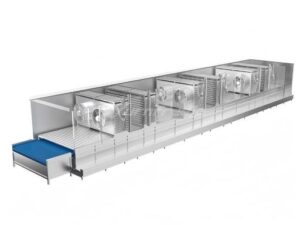
Tunnel Freezer Solution
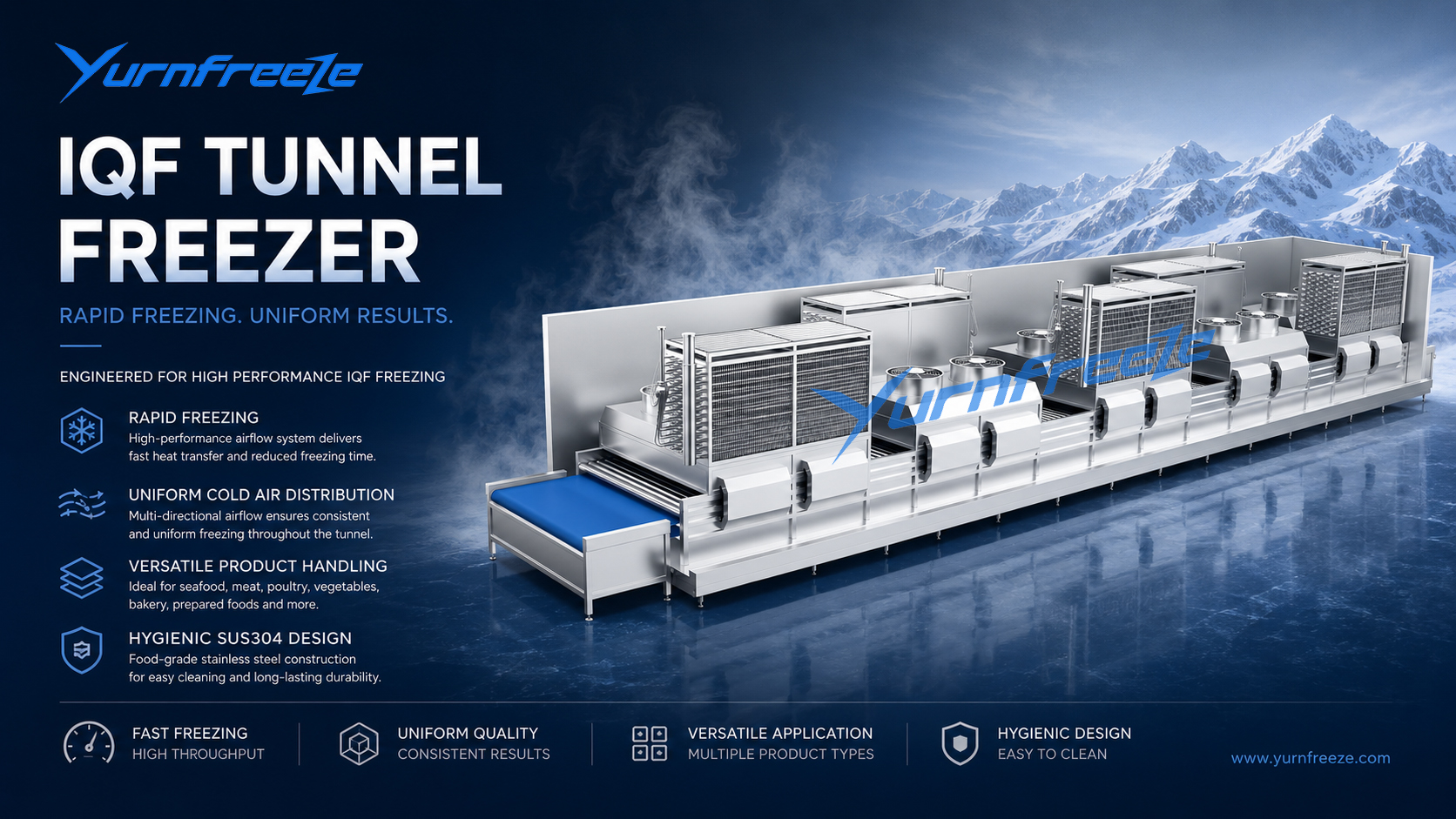
Suitable for:
- Whole fish and whole shrimp
- Large prepared food products
- Tray-packed products
- Large packaged food products
Key Advantages:
- Broad application flexibility;
- Highly adaptable processing capabilities
Many customers discover that after optimizing their freezing processes, not only does product quality improve, but production efficiency also increases significantly.
Is a Longer Freezing Time Really Better?
No. Precision matters more than duration.
The ideal approach is to achieve the best possible freezing results within the shortest appropriate time under suitable temperature conditions.
Only by doing so can food manufacturers effectively balance:
- Product quality;
- Operating costs;
- Production capacity.
This is the true direction of efficient and high-quality food quick freezing.
Mistake 3: Can All Food Products Use the Same Freezing Process?
No. Different food products should never share the same set of freezing parameters.
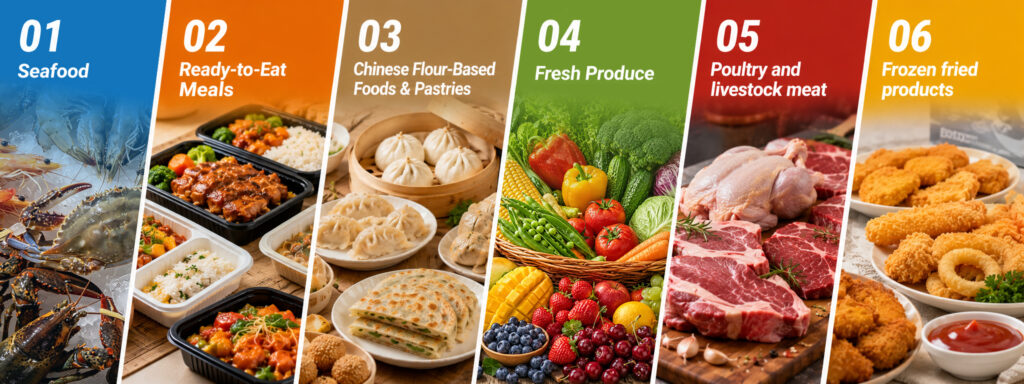
This is one of the most commonly overlooked mistakes in the food industry, yet it often comes with the highest cost.
As a result, manufacturers may encounter problems such as:
- Severe moisture loss in seafood products
- Frequent cracking in bakery products
- Inconsistent quality in prepared foods
- Discoloration and softening in fruits and vegetables
- Product sticking and clumping
Why Can’t Different Foods Share the Same Freezing Parameters?
Because the physical characteristics of food products vary significantly.
Different products differ greatly in terms of:
- Moisture content
- Product thickness
- Fat content
- Tissue structure
- Product shape and size
These differences determine that different products require different freezing methods and process parameters.
Why Do Some Factories Invest More in Equipment but Achieve Worse Results?
Many companies spend substantial amounts of money upgrading their equipment, yet continue to rely on outdated parameters, traditional practices, and previous production experience.
In reality, successful freezing performance depends on the combination of three key factors:
Equipment + Process + Product Compatibility
All three are equally important and indispensable.
How Does Yurnfreeze Help Customers Find the Most Suitable Freezing Solution?
At Yurnfreeze, we place greater emphasis on understanding the freezing logic behind each product.
Before recommending any solution, our team typically evaluates the following factors:
- What type of product is being processed?
(Seafood, bakery products, fruits and vegetables, or prepared foods)
- What is the required daily production capacity?
(1 ton, 5 tons, or 10 tons per day?)
- How much production space is available?
(Is a spiral freezer or tunnel freezer more suitable?)
- What are the product dimensions and thickness?
(These factors directly influence freezing time and airflow distribution.)
- Is IQF (Individual Quick Freezing) required?
(To prevent sticking and clumping.)
Based on these assessments, Yurnfreeze develops customized freezing processes and equipment solutions tailored to each customer’s specific requirements.
Ultimately, an effective freezing process is not just about preserving food—it is about enhancing product competitiveness.
Frequently Asked Questions (FAQ) About Food Quick Freezing
Q1: How Do I Choose Between a Spiral Freezer and a Tunnel Freezer?
The decision should primarily be based on:
- Product type
- Production capacity
- Available factory space
Spiral Freezers Are Better Suited For:
- Meatballs
- Dumplings
- Peeled shrimp
- Small packaged food products
Advantages of Spiral Freezers:
- Smaller footprint
- Higher production capacity
- Excellent continuous production capability
Tunnel Freezers Are Better Suited For:
- Whole fish
- Tray-packed prepared foods
- Large-sized products
Advantages of Tunnel Freezers:
- Greater application flexibility
- More adaptable processing configurations
If you are unsure which solution is right for your operation, Yurnfreeze can provide free equipment selection recommendations based on your products and daily production requirements.
Q2: What Freezing Equipment Is Suitable for Small Food Factories?
For small food processing facilities with a daily production capacity of approximately 1–3 tons, small tunnel freezers are often recommended.
Advantages Include:
- More flexible investment requirements
- Reduced installation footprint
- Easier switching between different products
These systems are particularly suitable for start-up food brands and growing food manufacturers.
Q3: Are Electricity Costs for Quick Freezing Equipment High?
In reality, the primary factor affecting operating costs is not the equipment itself, but freezing efficiency.
If:
- The freezing process is too slow
- Airflow distribution is uneven
- Freezing parameters are not properly matched to the product
then even lower-cost equipment may result in higher long-term operating expenses.
As a result, many food manufacturers are paying closer attention to energy consumption per unit of production capacity, rather than focusing solely on equipment purchase prices.
Q4: Why Do Products Stick Together After Quick Freezing?
In most cases, sticking occurs because:
- The freezing speed is insufficient
- or The IQF process has not been properly optimized
For products such as:
- Cherries
- Blueberries
- Corn kernels
- Shrimp
the use of IQF (Individual Quick Freezing) technology is strongly recommended to maintain product separation and prevent clumping.
Food Quick Freezing Is Never Just About “Freezing the Product”
To achieve better product quality and operational efficiency, manufacturers should avoid these three common misconceptions:
- Lower freezing temperatures always deliver better results
- Longer freezing times provide more stable preservation
- All food products can share the same freezing parameters
By avoiding these pitfalls, food manufacturers can truly achieve:
- Stable product quality
- Controlled energy consumption
- Improved profitability