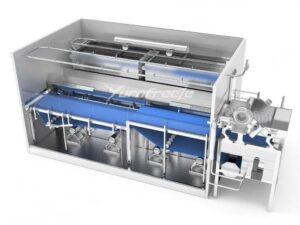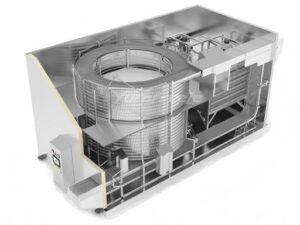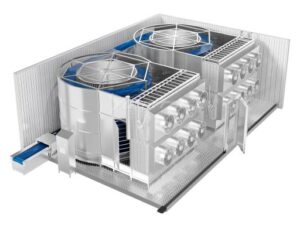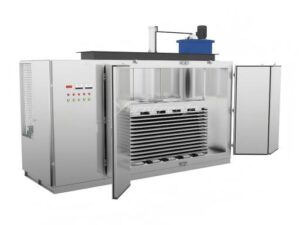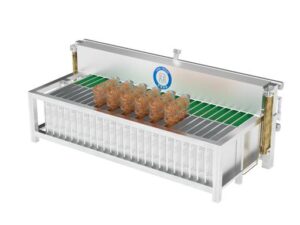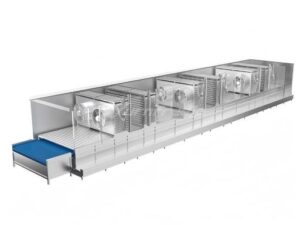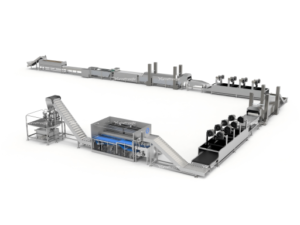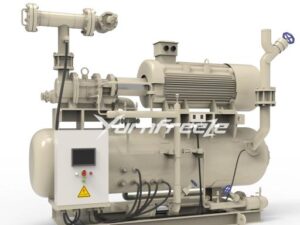


The infeed system determines how evenly food enters a fluidized bed freezer. Good feeding improves airflow, freezing speed, product separation, energy efficiency, and final IQF (Individual Quick Freezing) quality.
Uneven feeding causes clumping, poor freezing, and lower yield. Many IQF lines lose efficiency before products even enter the freezer.
What Is an Infeed System in a Fluidized Bed Freezer?
An infeed system transports, spreads, and prepares products before they enter the fluidized bed freezing zone. It controls layer thickness, distribution, drainage, and product stability.
The infeed system usually includes a feed conveyor, a distribution section, and sometimes a dewatering device. Its job is simple: deliver products to the freezer in a uniform and controlled layer.If products arrive in piles, the freezer must work harder. Air cannot reach every piece evenly. Some pieces freeze too slowly while others freeze too quickly.
Yurnfreeze fluidized bed freezers are designed with integrated infeed and distribution systems. This helps maintain stable product loading and improves freezing consistency across the entire belt width.
How Does the Infeed System Control Product Distribution?
It controls product distribution by spreading food evenly across the belt, regulating feed rate, reducing piling, and maintaining a consistent product layer before freezing.
The key challenge is achieving uniform distribution. Products should cover the belt evenly from left to right and from front to back.
Common Distribution Methods
| Method | Best For |
|---|---|
| Vibratory spreader | Vegetables, berries, shrimp |
| Oscillating distributor | Small particulate foods |
| Rotary spreader | Sticky or irregular products |
Why Distribution Matters
Imagine pouring frozen peas onto a belt. If most peas land in the center, airflow becomes uneven. The center freezes slowly while the edges freeze faster.
A proper distributor creates a thin, even layer. This allows cold air to fluidize and freeze each piece individually.
Why Is Uniform Feeding Critical for IQF Freezing?
Uniform feeding is critical because it allows equal airflow around each product, reduces clumping, improves freezing speed, increases yield, and delivers consistent IQF quality.
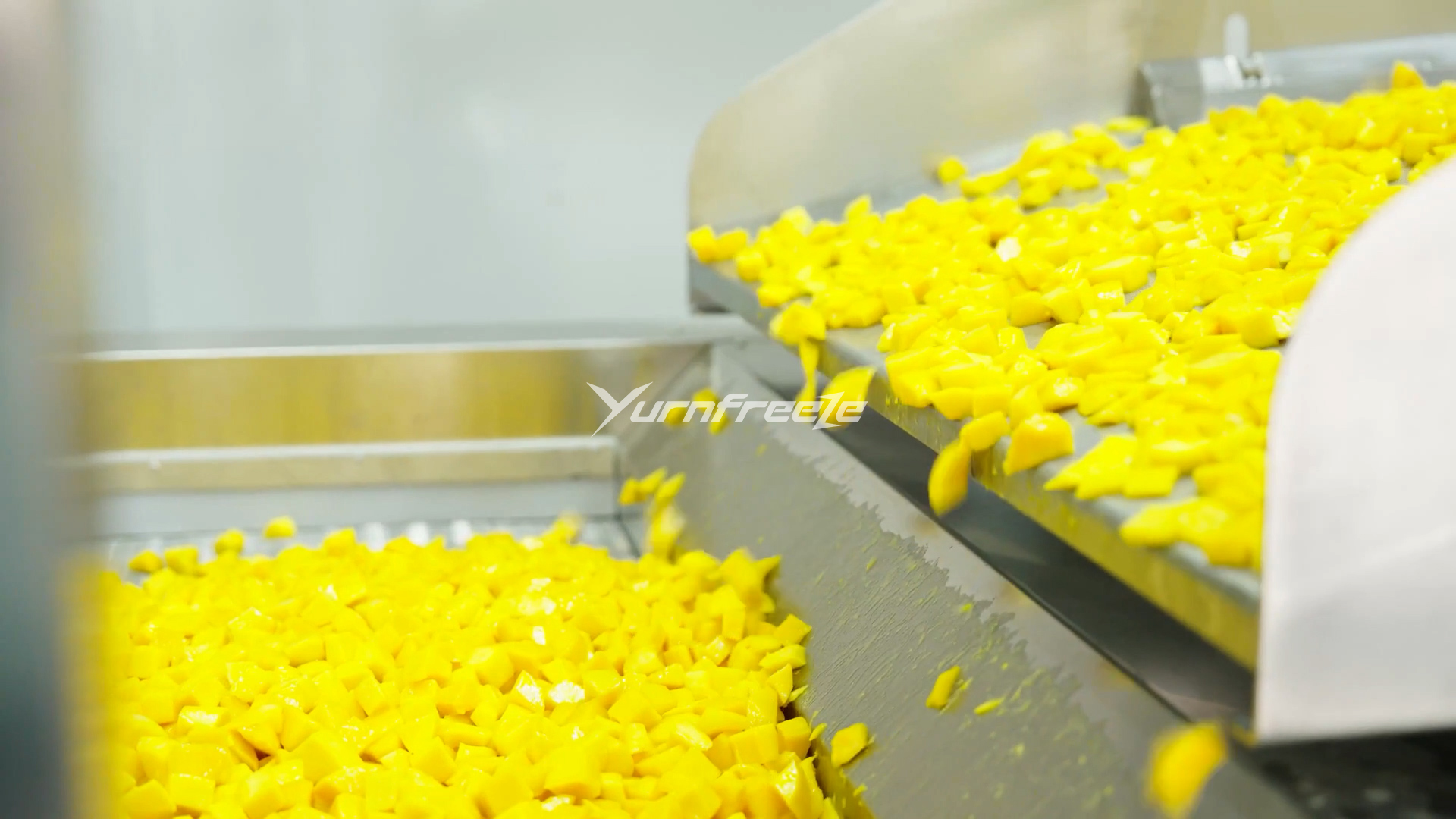
Problems Caused by Uneven Feeding
| Problem | Result |
|---|---|
| Product piles | Slow freezing |
| Clumping | Loss of IQF separation |
| Uneven residence time | Inconsistent product temperature |
| Blocked airflow | Higher energy consumption |
| Overloaded sections | Lower throughput |
The Airflow Connection
Fluidized bed freezers rely on strong upward airflow. Products must be light enough and evenly distributed enough to “float” slightly on the air stream.If the product layer is too thick, fluidization becomes weak. Products begin to stick together.
Which Infeed Conveyor Works Best for Different Food Products?
Vibratory conveyors work well for small free-flowing products, while belt conveyors suit larger or delicate foods. The best choice depends on size, moisture, fragility, and production capacity.
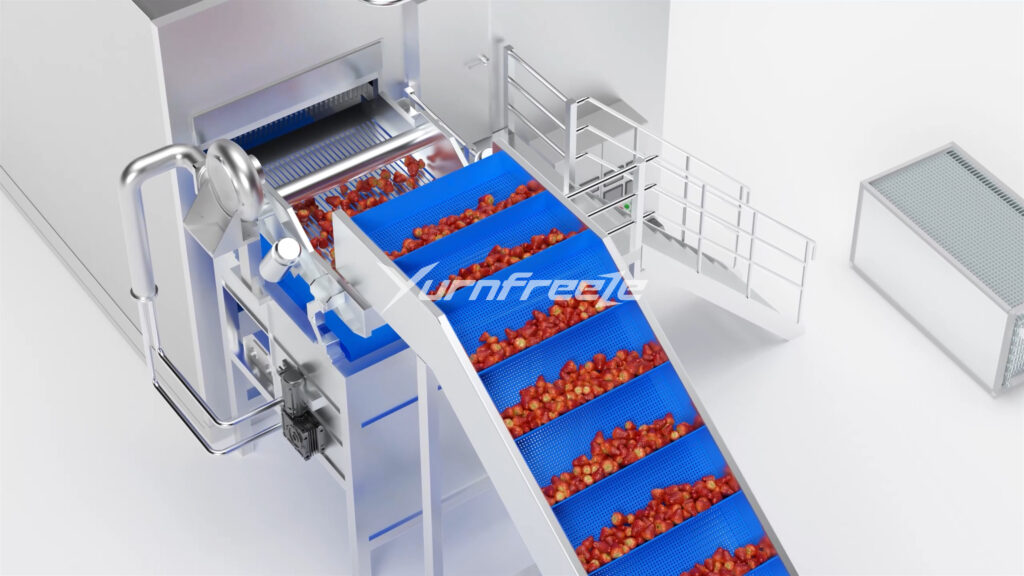
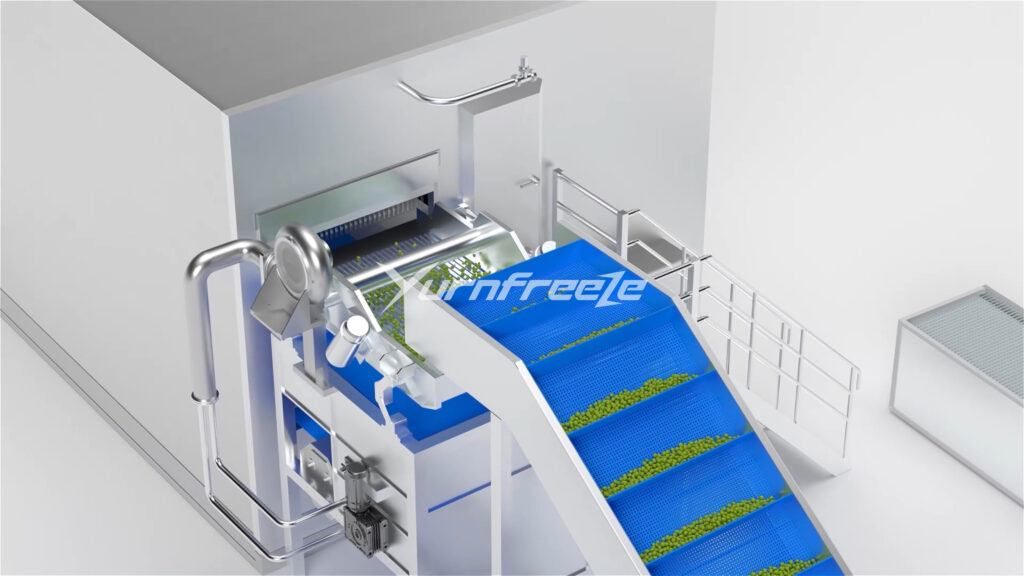
Recommended Conveyor Types
| Product | Recommended Infeed |
|---|---|
| Peas, corn, diced vegetables | Vibratory conveyor |
| Berries | Gentle vibratory conveyor |
| Shrimp | Vibratory + dewatering |
| French fries | High-capacity vibratory conveyor |
Yurnfreeze provides product-specific infeed configurations for vegetables, fruits, seafood, meat, and prepared foods. The goal is to match conveyor design with real production conditions rather than using a standard setup for every product. Get Free Design→
How Does Dewatering Before Freezing Improve Efficiency?
Dewatering before freezing improves efficiency by reducing surface moisture, minimizing ice buildup, improving product separation, lowering refrigeration load, and increasing final product yield.
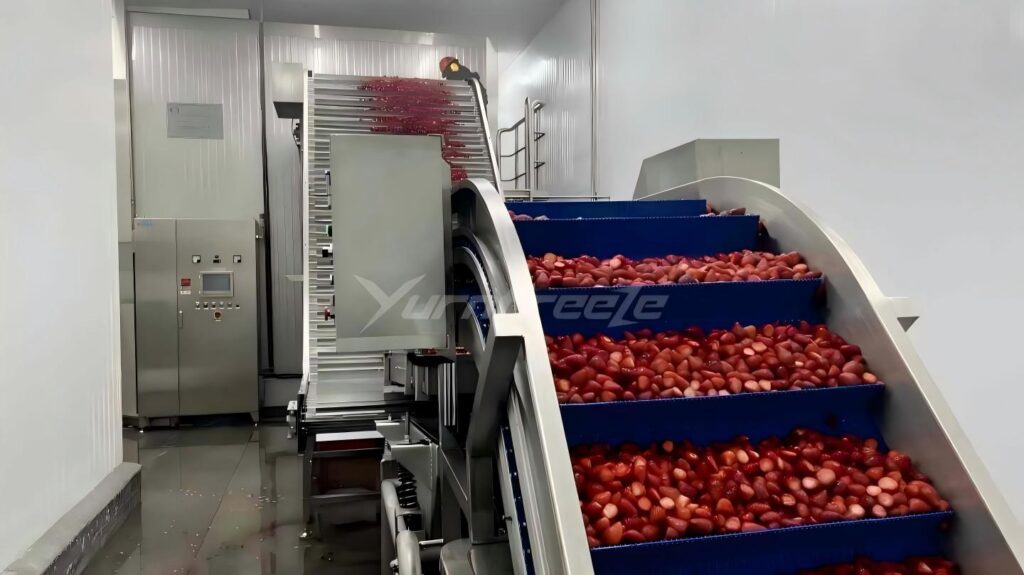
Wet products carry extra water into the freezer. That water becomes ice and consumes refrigeration capacity.
Benefits of Dewatering
- Less ice formation
- Better IQF separation
- Lower energy consumption
- Reduced frost accumulation
- Higher usable product yield
Typical Dewatering Methods
| Method | Common Products |
|---|---|
| Vibratory dewatering | Shrimp, vegetables |
| Air knife | Leafy products |
| Centrifugal dewatering | Small cut vegetables |
| Drain belt | Washed products |
What Should You Consider When Selecting an Infeed System?
When selecting an infeed system, evaluate product type, capacity, moisture level, distribution quality, sanitation, maintenance access, and integration with the fluidized bed freezer.
Selection Checklist
- Product size and shape
- Product fragility
- Surface moisture level
- Required capacity
- Cleaning and sanitation requirements
- Available plant space
- Integration with freezer controls
- Future expansion plans
Yurnfreeze engineers typically evaluate the entire IQF process, including dewatering, feeding, freezing, and product discharge. This integrated approach helps customers achieve more stable throughput and consistent IQF quality. Consult Yurnfreeze engineer now→
Conclusion
In IQF freezing, the infeed system is not just a conveyor. It is a critical process component that directly affects product separation, freezing speed, energy use, and final product quality.
FAQ
1.Why is product distribution important in IQF freezing?
Product distribution is critical because it determines how evenly food is exposed to cold airflow. Uniform distribution prevents clumping, improves heat transfer, and ensures each piece freezes individually. Poor distribution leads to uneven freezing, lower yield, and higher energy consumption.
2.Can one infeed system handle different food products?
One infeed system can handle multiple products, but performance depends on design flexibility. Adjustable speed, interchangeable spreaders, and different conveyor types are required. Without adaptation, mixed products may cause uneven feeding or damage, reducing IQF efficiency and product quality.
3.Do berries require a different infeed conveyor than vegetables?
Yes, berries usually require a gentler infeed system than most vegetables. They are soft, fragile, and easily damaged. Low-impact vibratory conveyors or soft belt systems are preferred. Vegetables like peas or diced carrots can tolerate stronger vibration and higher feed rates.
4.Does dewatering reduce freezing time?
Yes, dewatering significantly reduces freezing time. Removing surface water reduces the thermal load entering the freezer, allowing faster temperature drop and better airflow efficiency. It also prevents ice buildup and improves product separation during IQF processing.
5.How do I choose the right infeed system?
Choosing the right infeed system depends on product type, moisture level, capacity, and handling sensitivity. You should also consider distribution accuracy, cleaning requirements, and integration with the fluidized bed freezer. A well-matched system improves yield, freezing speed, and long-term operational stability.